
Black Maple
Acer nigrum
Active Threats to Black Maple
LDD Moth (Spongy Moth)
Formerly known as Gypsy Moth. Caterpillars defoliate trees in late spring, with periodic outbreak years causing severe damage.
Signs to watch for:
- •Visible caterpillars with blue and red spots
- •Skeletonized or completely eaten leaves
- •Egg masses on tree trunks (tan, fuzzy patches)
- •Frass (caterpillar droppings) under trees
Recommended Action: Healthy trees typically survive defoliation. Repeated years of heavy feeding may require professional intervention.
Free consultation available
Maple Tar Spot
Common fungal disease causing black spots on maple leaves. Mostly cosmetic and does not seriously harm healthy trees.
Signs to watch for:
- •Black tar-like spots on leaves
- •Yellow halos around spots
- •Early leaf drop in severe cases
Recommended Action: Rake and dispose of fallen leaves in autumn to reduce spores. No treatment typically needed.
Free consultation available
Overview
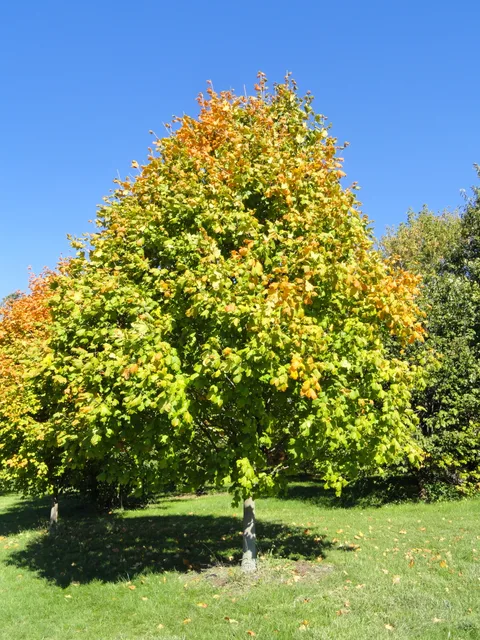
A native maple of Southern Ontario's Great Lakes region, extending east into Quebec. It is easily overlooked because it looks so much like sugar maple, hybridizes with it, and is treated by many botanists as a subspecies of sugar maple (Acer saccharum ssp. nigrum). In the Quinte area it is much less often recognised than sugar maple; trees with drooping, 3-lobed, hairy-backed leaves in rich, moist woods and along stream bottoms are worth a second look.
Black maple sap has a sugar content similar to sugar maple, and it is tapped for syrup alongside sugar maple; the two are often not told apart in a sugarbush. The heavy, hard wood is sold with sugar maple as hard maple for flooring, furniture, cabinets and cutting blocks.
Full Tree
Identification
Leaves
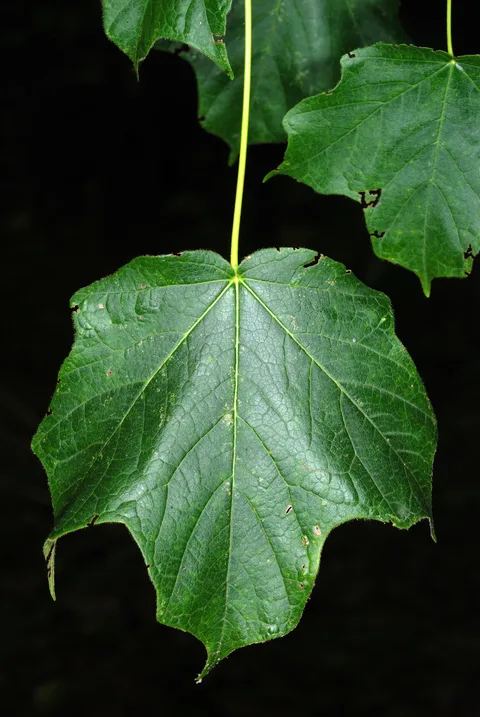
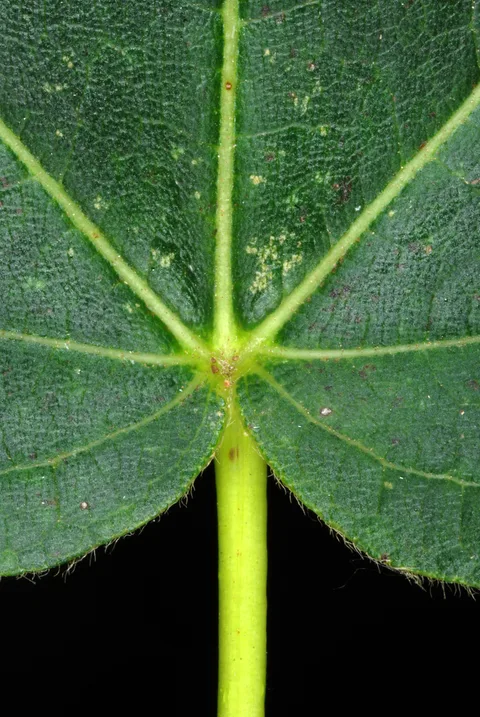
Looks like a sugar maple leaf that is wilting: thicker, darker green, usually with 3 main lobes instead of sugar maple's 5, and with the edges drooping down. The underside is yellowish-green with soft, velvety brownish hairs, the leaf stalk is hairy, and leafy stipules are often present where the stalk meets the twig, which sugar maple lacks. Fall colour is yellow to brownish-yellow.
Leaves
Bark
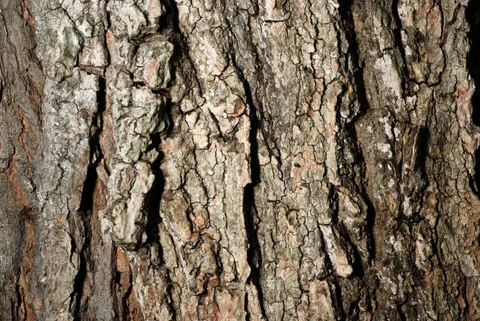
Smooth and dark grey on young trees, becoming deeply furrowed with long, narrow, irregular vertical ridges. It is usually darker than sugar maple bark, but bark alone will not reliably separate the two.
Bark
Flowers
Clusters of small greenish-yellow flowers hang on slender hairy stalks 2-5 cm long and open just before the leaves in spring. Individually inconspicuous, but a tree in full flower has a yellow-green haze.
Fruit
Paired winged keys about 2.5 cm (1 inch) long with wings nearly parallel or slightly spread, ripening green to brown in late summer and fall. The pairs often separate when shed. Birds and small mammals eat the seeds.
Valuable wildlife food source
Growing Conditions
Climate
Hardy well beyond Belleville's zone 5b. Grows best in deep, moist, fertile loam such as stream bottoms and the better-drained parts of the Bay of Quinte lowlands, and tolerates somewhat drier sites than sugar maple. Like sugar maple it does poorly with road salt, compacted soil and small, paved-in root zones. Strong wood, but narrow forks with included bark can split under heavy ice.
Hardiness Zones: 3b, 4a, 4b, 5a, 5b, 6a, 6b
Light Requirements
Soil
Moisture: moist
Drainage: well-drained, moderate
pH Range: 5.5 - 7.5
Tolerance
Care & Maintenance
Pruning
Best Season: Summer, Fall, Winter
Frequency: Every 3-5 years on young trees for structure; minimal on mature trees
- Prune from early summer (once leaves have fully expanded) through early winter; avoid late winter and early spring when maples 'bleed' heavily
- Train young trees to one central leader and remove narrow V-shaped forks with included bark
- Keep cuts small; remove dead, damaged and crossing branches rather than thinning heavily
- Avoid wounding the trunk with mowers and trimmers, and do not over-tap for syrup; tapholes and wounds let decay in
Avoid: Late winter to leaf-out (heavy sap bleeding); Hot, dry spells when trees are already stressed
Watering
Establishment: Water deeply once a week for the first two to three growing seasons; young trees scorch if they dry out
Mature: Tolerates somewhat drier soil than sugar maple once established, but grows best in evenly moist, deep soil
Seasonal Care Timeline
Spring
- Sap runs in late winter and early spring on freeze-thaw days; avoid pruning then
- Spongy moth eggs hatch from late April to mid-May
- Anthracnose blotches after cool, wet springs
Summer
- Leaf scorch in heat and drought, worst near pavement and salted roads
- Tar spot appears on leaves in mid to late summer
- Wilting on one side of the crown may be verticillium wilt
Fall
- Yellow to brownish-yellow fall colour; early colour in late July or August is a decline warning
- Rake and remove leaves with tar spot
- Good time for structural pruning once leaves drop
Winter
- Ice loading on narrow forks
- Salt spray and salty snow piles near roads
- Scrape off spongy moth egg masses
- Tapping season starts in late winter
Common Issues
Tar Spot
LowFungal leaf spots (Rhytisma species) that form raised, shiny black 'tar' spots on maple leaves in mid to late summer. The Morton Arboretum lists tar spot among black maple's diseases. Mostly cosmetic.
Symptoms: Pale yellow-green spots on leaves in early to mid summer, Raised, shiny black spots or clusters of tiny black specks later in summer, Some early leaf drop in wet years
Treatment: Usually none needed. Rake and dispose of fallen leaves to reduce next year's infection.
Prevention: Clean up leaves in fall and keep the crown open to air movement.
Anthracnose and Leaf Scorch
LowAnthracnose is a fungal leaf disease favoured by cool, wet springs; leaf scorch is drying of the leaf edges from heat, drought, root damage or road salt. The two are easy to confuse and both occur on black maple.
Symptoms: Tan to brown blotches along the veins after a wet spring (anthracnose), Browning that starts at the leaf edges and works inward in hot, dry weather (scorch), Some early leaf drop
Treatment: Anthracnose rarely needs treatment on established trees; rake up fallen leaves. For scorch, deep watering and mulching, and finding the cause (salt, a restricted root zone, drought).
Prevention: Water young trees in dry spells, mulch the root zone, and keep salty snow off the roots.
Maple Decline
ModerateA slow decline caused by repeated stress, not one pest. In towns the main triggers are drought, de-icing salt and road or sidewalk construction over the roots; in woodlots and sugarbushes, repeated defoliation, heavy machinery and over-tapping. Weakened trees are then attacked by root rots, cankers and twig blights.
Symptoms: Short yearly twig growth, Sparse, small, pale or scorched leaves, Fall colour starting in late July or August, Dieback starting at the top of the crown
Treatment: Remove the stress where possible (mulch, deep watering, protect roots, reduce salt); prune out deadwood. Advanced decline is rarely reversible and badly affected trees may need removal near targets.
Prevention: Protect the root zone from construction and compaction, avoid salt splash and salty snow piles, water in drought and tap conservatively.
Professional arborist recommended
Verticillium Wilt
HighA soil-borne fungus that invades the water-conducting tissue of maples, including black maple, causing branches or whole sections of the crown to wilt.
Symptoms: Sudden wilting and browning of leaves on one branch or one side of the crown, Olive-green to brown streaks in the sapwood of affected branches, Dieback that progresses over one or more seasons
Treatment: No cure. Prune out dead branches, water and mulch to support the tree; remove trees that keep declining.
Prevention: Avoid root wounding and do not replant maples where a maple died of verticillium wilt.
Professional arborist recommended
Spongy Moth (LDD Moth)
ModerateInvasive defoliating caterpillar (Lymantria dispar dispar, formerly gypsy moth). Black maple is a recorded host, and Ontario lists sugar maple as a host and maple stands among those damaged in recent outbreaks. Repeated defoliation is a common start to maple decline.
Symptoms: Hairy caterpillars with paired blue then red spots on the back, May to early July, Holes in leaves or branches stripped bare by late June, Tan, fuzzy egg masses on trunks and limbs from late July
Treatment: Scrape egg masses into soapy water from August to mid-April; a biological insecticide (Btk) on young caterpillars from mid-April to mid-May; burlap bands from mid-May through June.
Prevention: Check trunks for egg masses each winter and water trees during drought after defoliation.
Sources & References
Information compiled from the following authoritative sources:
Quick Facts
When to Call an Arborist
Recommended inspection: Every 2-3 years, and after construction near the tree
- •Dieback in the top of the crown or early fall colour in summer
- •Wilting on one branch or one side of the tree
- •Fungal conks, cankers or decay at old wounds or tapholes
- •Cracks, included bark in V-shaped forks, or splits after ice storms
- •Construction, trenching or grade changes planned within the drip line
Free consultation for Belleville residents
Recommended Services
Based on Black Maple characteristics