
Striped Maple
Acer pensylvanicum
Active Threats to Striped Maple
Maple Tar Spot
Common fungal disease causing black spots on maple leaves. Mostly cosmetic and does not seriously harm healthy trees.
Signs to watch for:
- •Black tar-like spots on leaves
- •Yellow halos around spots
- •Early leaf drop in severe cases
Recommended Action: Rake and dispose of fallen leaves in autumn to reduce spores. No treatment typically needed.
Free consultation available
Overview
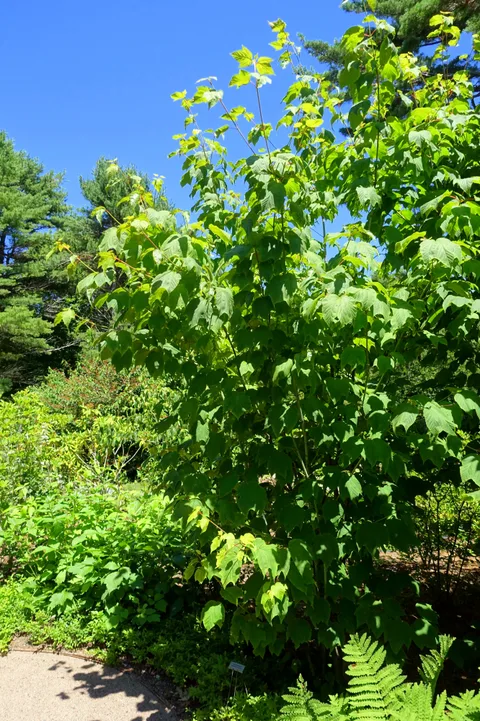
Native across Central and Southern Ontario, from Norfolk County east to the Quebec border and north to Sault Ste. Marie, in damp woods, ravines and on cool north-facing slopes. Around Belleville it is a tree of the cooler, moist mixed woods toward the Canadian Shield edge north of Hwy 7 and of shaded ravines, not of the open, sunny clay plain along the Bay of Quinte, and it is seldom planted in town.
Named moosewood because moose browse it heavily. The fine-grained wood has been used for pulp, veneer and cabinetry inlay.
Full Tree
Identification
Leaves
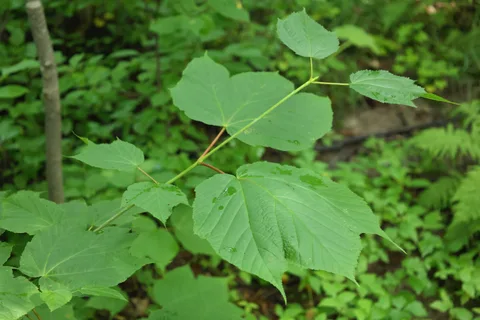
Large, thin, pale yellowish-green leaves, big for such a small tree, with three shallow lobes at the top that end in long, fine points (the 'goose foot'). The edges are finely double-toothed and both surfaces are smooth. They turn a clear yellow in fall.
Leaves
Bark
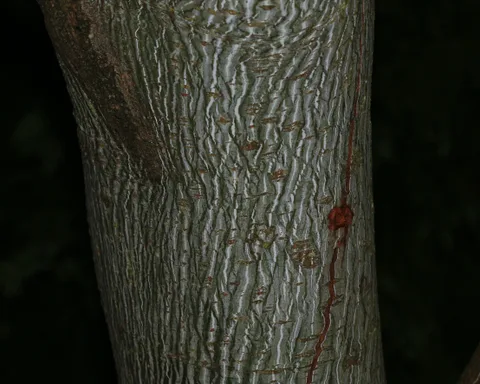
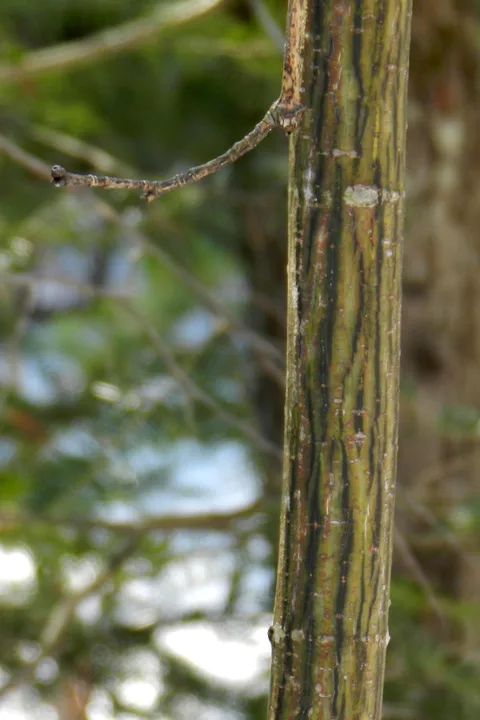
The easiest native tree to recognise in the woods: smooth green bark with long, vertical, whitish stripes, appearing after the first year or two. On older trunks the stripes darken and the bark becomes greenish-brown. Ontario's only native 'snakebark' maple.
Bark
Flowers
Bell-shaped yellow-green flowers about 6 mm across hang in long drooping clusters at the branch tips in May and June, after the leaves have expanded. Most trees carry only male or only female flowers, and a small number change sex over the years. The nectar is visited by bees.
Fruit
Paired keys with wings 2.5-3 cm long spread at about a right angle, hanging in long chains. They ripen in September and October and are wind-dispersed in fall.
Valuable wildlife food source
Growing Conditions
Climate
Fully winter hardy here; its limit is summer heat, sun and drought rather than cold. It needs cool, moist, slightly acidic soil and shade, which makes the rocky, acidic Shield-edge woods north of Belleville far better ground for it than the alkaline lowland clays near the bay. It can be grown in town only in a shaded, sheltered, moist spot.
Hardiness Zones: 3a, 3b, 4a, 4b, 5a, 5b, 6a, 6b
Light Requirements
Soil
Moisture: moist
Drainage: well-drained
pH Range: 4.5 - 6
Tolerance
Care & Maintenance
Pruning
Best Season: Summer, Fall
Frequency: Rarely needed; remove dead or broken stems only
- Prune after the leaves have fully expanded through fall; avoid late winter and early spring when maples bleed sap
- Keep its natural multi-stemmed, arching form; do not try to make it a standard shade tree
- Remove dead stems back to healthy wood; it can resprout from the base
- Avoid wounding the thin striped bark, which is easily damaged by mowers and string trimmers
Avoid: Late winter to leaf-out (sap bleeding); Hot, dry spells
Watering
Establishment: Water deeply once or twice a week for the first two growing seasons; shallow roots dry out quickly
Mature: Needs evenly moist, cool soil; a thick layer of leaf litter or mulch over the roots helps
Seasonal Care Timeline
Spring
- Flowers in May and June after leaf-out
- Check for winter browse damage and cut back torn stems
- Avoid pruning during spring sap flow
Summer
- Leaf scorch in heat, sun and drought
- Water during dry spells; shallow roots dry out quickly
- Speckled tar spot on leaves
Fall
- Clear yellow fall colour
- Keys ripen and disperse in September to November
- Put up browse guards before winter
Winter
- Deer, rabbit and moose browse on stems and buds
- Green-and-white striped bark gives winter interest
Common Issues
Leaf Scorch from Sun, Heat and Dry Soil
ModerateStriped maple is a shade tree of cool, moist woods. Planted in full sun, beside pavement or on hot, dry sites, the large thin leaves scorch and the tree slowly declines. This is the most common reason it fails in yards.
Symptoms: Brown, crisp leaf edges and patches by midsummer, Early yellowing and leaf drop, Sparse crown and dying stems on sunny, dry sites
Treatment: Water deeply, mulch the root zone and add shade; trees in full sun on dry soil seldom recover fully and are better moved or replaced.
Prevention: Plant only in partial to full shade on cool, moist, acidic soil, such as under taller trees on the north or east side of a house.
Deer, Moose and Rabbit Browse
ModerateMoose, white-tailed deer, rabbits, beavers and porcupines all eat striped maple shoots, buds, leaves and bark; the name moosewood comes from this. Browse can keep young trees from ever growing out of reach.
Symptoms: Torn, ragged stem tips and missing buds, Bark stripped or gnawed near the ground, Bushy, stunted young plants that never gain height
Treatment: Remove badly damaged stems; fence or cage young trees.
Prevention: Protect young trees with wire cages or tree guards through the winter, unless they are planted as wildlife food.
Speckled Tar Spot
LowA native fungus (Rhytisma punctatum) that Natural Resources Canada lists on striped maple. Mainly cosmetic and not a serious health issue.
Symptoms: Light green to pale yellow spots on leaves in early to mid summer, Groups of small, shiny, black raised specks within the spots later in summer
Treatment: None needed. Rake and dispose of fallen leaves.
Prevention: Leaf cleanup in fall; good air movement.
Trunk Rot and Cankers
ModerateWood decay fungi such as hardwood trunk rot (Phellinus igniarius) and tinder conk (Fomes fomentarius) are recorded on striped maple, entering through wounds and dead stems. Verticillium wilt and canker diseases are also reported.
Symptoms: Hoof-shaped or shelf-like fungal conks on the trunk, Sunken or cracked bark cankers, Wilting or dying stems, Soft, punky wood at old wounds
Treatment: Cut out dead and decayed stems; remove stems with decay that could fall on paths or structures.
Prevention: Avoid bark wounds, keep the tree in suitable shade and moisture so it stays vigorous.
Sources & References
Information compiled from the following authoritative sources:
Quick Facts
When to Call an Arborist
Recommended inspection: Only if stems die back or fungal growth appears
- •Fungal conks on the trunk or main stems
- •Several stems dying back at once
- •Large stems leaning over paths, decks or roofs
- •Leaf scorch every summer despite watering (site is too sunny or dry)
Free consultation for Belleville residents
Recommended Services
Based on Striped Maple characteristics