
American Chestnut
Castanea dentata
Overview
American chestnut is listed as endangered in Ontario and is protected under the Species Conservation Act, 2025, which replaced the Endangered Species Act, 2007 on March 30, 2026. The province says activities that impact a protected species may require registration or a permit under the Act, through the Species Conservation Registry. In Ontario the tree is native only to the Carolinian zone of the southwest, roughly west of Toronto through London to Windsor and south of the 43rd parallel, so Belleville is well outside its natural range. Around here you will see it only as a rare planted specimen, or sprouts growing back from one. Most 'chestnut' trees in Quinte-area yards and parks are horse chestnuts (a different, unrelated European tree) or planted Chinese, European or hybrid chestnuts. If you think you have an American chestnut, or need work done near one, talk to Wilsaw Tree Service first: we help confirm the identification and check the province's requirements before any cutting.
Before chestnut blight, southwestern Ontario had an estimated 1.5 to 2 million American chestnuts. The wood was once used for everything from furniture to railroad ties, the trees were harvested for tannins for the leather industry, and the nuts were eaten by people and fed to cattle. The blight reached southern Ontario in the early 1920s; recent estimates suggest only about 1,000 mature American chestnuts remain in Ontario, and most surviving trees are sprouts from old roots.
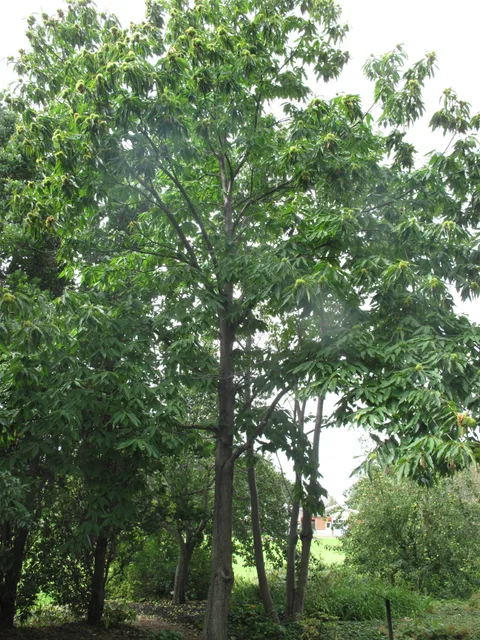
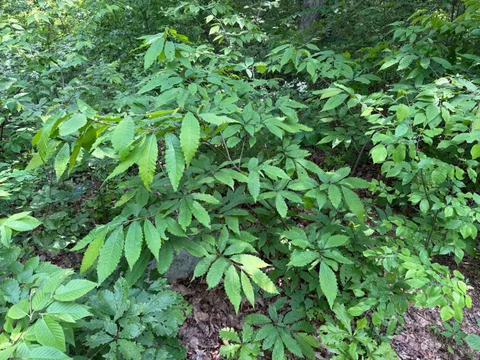
Full Tree
Identification
Leaves
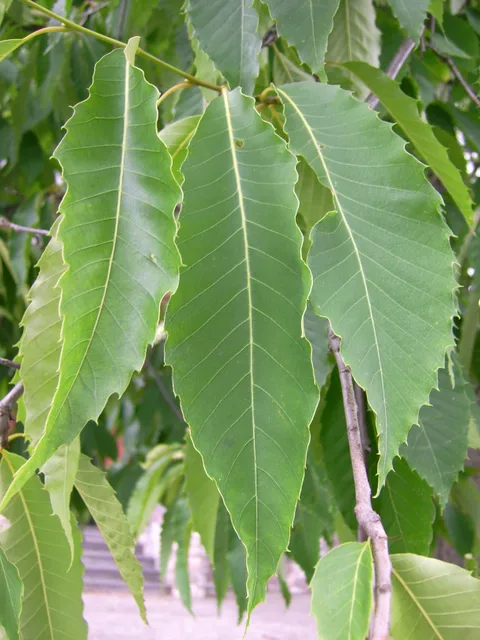
Thin, papery, yellowish-green leaves, dark green on top and paler underneath, hairless on both sides, and often hooked to one side. The straight, parallel veins each run out to a prominent tooth. Chinese chestnut, the chestnut most often planted, has more oval leaves with a rounded base, smaller teeth, and a thick, waxy texture, and its sun leaves look whitish underneath from dense hairs. Horse chestnut is not a chestnut at all: its leaves are opposite and compound, with 5-7 leaflets spreading like fingers from one point.
Leaves
Bark
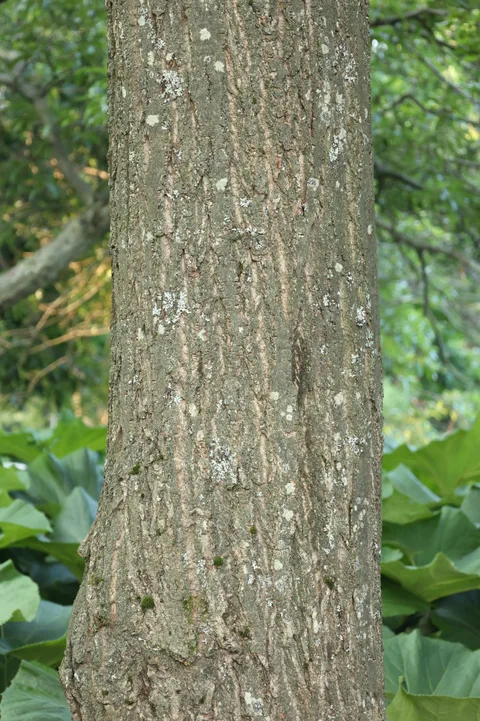
Smooth and dark brown to olive on young stems, breaking into broad, flat-topped ridges with age. Because chestnut blight kills the stems back, most American chestnuts in Ontario today are sprouts with smooth young bark rather than big ridged trunks.
Bark
Flowers
Showy, pale green to almost white catkins 12-20 cm (5-8 in) long appear from late May to early July, after the leaves are nearly full grown. The small female flowers sit at the base of some catkins. Flowers are pollinated by insects, and a tree cannot pollinate itself: it needs another chestnut within pollen range to set good nuts, which is one reason scattered survivors rarely reproduce.
Fruit
A round bur 5-8 cm (2-3 in) across, densely covered in long, slender spines 2-3 cm long, splits open in early fall around the first frost to release 1-3 brown, edible nuts. American chestnut nuts are small, about 1.3-2.5 cm (0.5-1 in), with a pointed tip; Chinese chestnut burs have shorter, sparser spines and larger, rounder nuts. Birds and large mammals eat the nuts. Horse chestnut seeds ('conkers') look similar at a glance but are mildly toxic and should not be eaten.
Valuable wildlife food source
Growing Conditions
Climate
At its northern limit in Ontario, where it grows naturally in areas with a 140-180 day frost-free season. It prefers well-drained, acidic sandy or gravelly soils (about pH 4-6), which makes the limestone-derived, often alkaline clays of the Bay of Quinte lowlands a poor match; planted trees do best on deep, acidic, sandy loam with good drainage. Belleville is north and east of its natural range, so give a planted tree a sheltered spot.
Hardiness Zones: 5a, 5b, 6a, 6b
Light Requirements
Soil
Moisture: moist, dry
Drainage: well-drained
pH Range: 4 - 6.5
Tolerance
Care & Maintenance
Pruning
Best Season: Winter
Frequency: Only as needed, and only after the tree's identity and protected status have been checked
- Call before you cut. American chestnut is listed as endangered in Ontario and is protected under the Species Conservation Act, 2025, and the province says activities that impact a protected species may require registration or a permit through the Species Conservation Registry. Wilsaw Tree Service can help you confirm what the tree is and check the requirements before any pruning, removal or construction near it
- Keep wounds to a minimum: chestnut blight enters through fresh wounds and bark cracks
- Prune in dry, dormant weather and clean tools between trees
- Keep mowers, string trimmers and equipment off the trunk and root collar; surviving roots are what keep a blighted tree alive
Avoid: Wet weather, when blight spores spread by rain; Any time before the tree's identity and protected status have been checked
Watering
Establishment: Deep watering every week or two through the first two summers on sandy soils
Mature: Grows best in moist to dry, well-drained soil; no regular watering needed once established
Seasonal Care Timeline
Spring
- Look for new cankers and dieback as leaves come out
- Avoid wounding bark in wet weather, when blight spores spread
- Check the provincial requirements well before any planned work
Summer
- Long cream catkins from late May to early July
- Wilting stems or leaves that turn brown and hang on: possible blight
- Best season to check identity from the leaves
Fall
- Spiny burs split open around the first frost
- Pick up fallen nuts to limit weevils
- Horse chestnut conkers and Chinese chestnuts also drop now; check the leaves to tell them apart
Winter
- Dormant-season inspection for cankers on bare stems
- Rodent and deer damage to young planted trees
Common Issues
Chestnut Blight
SevereAn introduced bark fungus (Cryphonectria parasitica) that arrived in North America on Japanese chestnut nursery stock, was first found in New York in 1904 and reached southern Ontario in the early 1920s. It killed most of Ontario's estimated 1.5-2 million American chestnuts. Cankers girdle the stem and kill it above the infection, usually within 1-3 years, but the roots generally survive and send up new sprouts, which are then usually reinfected before they can produce nuts.
Symptoms: Reddish-brown, swollen or sunken patches (cankers) on stems that crack and shed bark, Tiny yellow-orange to reddish pimple-like fungal bodies in the cracked bark, Dieback of the stem or branch above the canker, Dead leaves that stay attached late into the season, Clusters of sprouts below a canker or from the base of a dead stem
Treatment: No cure. Treatments on individual trees can slow cankers with some success but do not cure the tree, and cutting and burning infected trees did not stop the disease. Because the species is protected, check the provincial requirements with us before cutting a blighted stem.
Prevention: Avoid wounding the bark, keep the tree free of drought stress, and plant only stock from a known source. Breeding programs, including the Canadian Chestnut Council's since 2000, are working toward blight-resistant American chestnuts for Ontario.
Professional arborist recommended
Mistaken Identity and Hybrids
ModerateMost 'chestnut' trees in Belleville-area yards are not American chestnut. Horse chestnut (Aesculus hippocastanum), a planted European tree with opposite, finger-like compound leaves, is a different family altogether. Chinese, European and Japanese chestnuts and their hybrids are also planted for nuts and can cross with American chestnut.
Symptoms: Opposite, compound leaves with 5-7 leaflets: horse chestnut, not a true chestnut, Oval, thick, waxy leaves that look whitish underneath: likely Chinese chestnut, Hairy twigs and rounded buds hugging the twig: likely Chinese chestnut, A mix of American and Asian features: possible hybrid
Treatment: Identification only. Field features narrow it down, but some trees can only be confirmed by DNA testing.
Prevention: When planting, buy American chestnut from a reputable native seed source and keep it away from planted Asian chestnuts if you want pure seed.
Professional arborist recommended
Chestnut Weevils
LowChestnut weevil larvae feed inside the nuts. Ontario's recovery strategy rates the chestnut weevil a low threat to the species, though it can spoil part of a nut crop.
Symptoms: Small round holes in fallen nuts, Hollowed nuts with grubs inside
Treatment: Collect and dispose of damaged nuts.
Prevention: Pick up fallen nuts promptly.
Sources & References
Information compiled from the following authoritative sources:
Quick Facts
When to Call an Arborist
Recommended inspection: Yearly for confirmed or suspected American chestnuts, and before any planned work nearby
- •You think you have an American chestnut and want it confirmed
- •Planning a removal, addition, driveway, septic bed or grading near a chestnut
- •Orange-dotted, cracked or sunken cankers on the trunk
- •Sudden wilting or dieback of a stem
- •Large dead stems over a house, driveway or play area
Free consultation for Belleville residents
Recommended Services
Based on American Chestnut characteristics