
White Ash
Fraxinus americana
Active Threats to White Ash
Emerald Ash Borer
Invasive beetle devastating ash trees across Eastern Ontario. All ash species are at risk.
Signs to watch for:
- •D-shaped exit holes in bark
- •Canopy dieback starting from top
- •Bark splitting and woodpecker damage
- •S-shaped larval galleries under bark
Recommended Action: All ash trees should be assessed by a certified arborist to determine treatment options or removal timeline.
Free consultation available
Overview
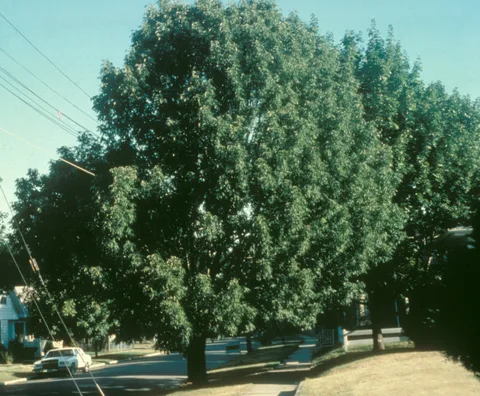
White ash is the largest of Ontario's native ashes and was once a major shade and street tree in Belleville, as well as a common tree in upland hardwood woodlots across Hastings County. Emerald ash borer is established throughout southern Ontario, including the Quinte area, and untreated ash rarely survive it, so the large white ash still standing on older streets and lots are either being protected with injections or need a removal plan. It grows on drier, better-drained upland sites than green ash, which favours low, wet ground along the Moira River and the Bay of Quinte shore.
White ash wood is heavy, hard, strong and tough. It made nearly all wooden baseball bats and was used for hockey sticks, tennis rackets, canoe paddles, oars, snowshoes, tool handles and furniture.
Full Tree
Identification
Leaves
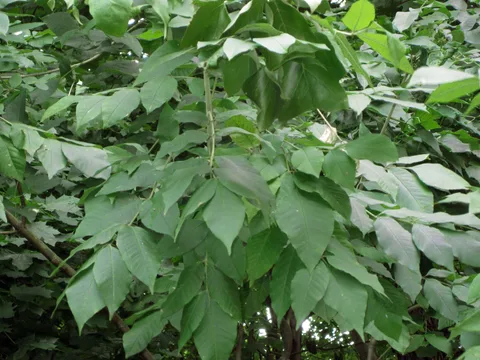
Opposite compound leaves with 5-9 leaflets, usually 7, each on a short stalk of its own. Leaflets are dark green above and very pale, almost whitish, underneath, hairless except along the veins. In fall they turn reddish-purple to bronze-purple, a colour no other Belleville ash shows; green ash goes yellow and black ash a dull brown. Leaflets drop one at a time in autumn.
Leaves
Bark
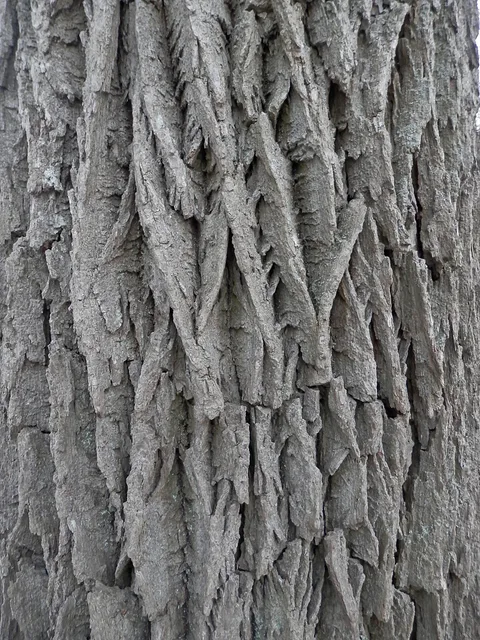
Light grey bark finely furrowed into thin, firm, intersecting ridges that form a regular diamond pattern. Very similar to green ash bark, so use the leaf scars, buds and leaf undersides to confirm the species.
Bark
Flowers
Small purple to greenish flowers without petals open in April-May, before or as the leaves emerge. White ash is dioecious: only female trees bear seed, and flowering starts once a trunk reaches roughly 8-10 cm (3-4 in) in diameter.
Fruit
Single-winged samaras 2.5-5 cm (1-2 in) long hang in dense clusters on female trees. The wing wraps only the tip of a plump, rounded seed case (on green ash the wing runs well down the seed). Seeds ripen August-October and drop through the winter; some birds eat them.
Valuable wildlife food source
Growing Conditions
Climate
Fully hardy in Belleville's zone 5b and well suited to deep, moist, well-drained loams and clay loams, whether on the limestone plain around the city or in pockets of better soil on the Canadian Shield edge north of Highway 7. Avoid wet, poorly drained sites. EAB, not climate, is what limits it here today.
Hardiness Zones: 4a, 4b, 5a, 5b
Light Requirements
Soil
Moisture: moist
Drainage: well-drained, moderate
pH Range: 5 - 7.5
Tolerance
Care & Maintenance
Pruning
Best Season: Winter
Frequency: Structural pruning every 3-5 years while young; mature trees mainly need deadwood removal
- Prune during dormancy (late fall to late winter) when the branch structure is easy to see
- Train young trees to one central leader; opposite branching tends to produce forks that split later
- Before paying for major pruning on a mature ash, confirm the tree is healthy enough to keep and decide on emerald ash borer protection first
- Keep ash prunings and firewood on site or dispose of them locally; moving ash wood spreads emerald ash borer
Avoid: Spring leaf-out through early summer, when trees are most stressed and adult emerald ash borers are flying
Watering
Establishment: Water deeply once a week through the first two growing seasons
Mature: Usually unnecessary on deep, moist soils; a lawn tree on shallow or sandy ground benefits in dry spells
Seasonal Care Timeline
Spring
- Book EAB treatment early for trees you are protecting, so it is done on time for the season
- Check for branches broken in winter ice storms
- Watch for slow or patchy leaf-out, an early sign of EAB or ash decline
Summer
- Adult emerald ash borers emerge in early summer and lay eggs on the bark
- Note any crown thinning while trees are in full leaf
- Water young and treated trees in dry spells
Fall
- Purple-bronze fall colour is normal for white ash; early yellowing in late summer is not
- Decide on removal of dead or declining ash before winter, when dead limbs become more dangerous
- Plan replacements with a mix of non-ash species
Winter
- Woodpecker damage (light patches of stripped bark) is a strong sign of EAB larvae
- Ice loading on trees already weakened by EAB or decay
- Keep ash firewood local
Common Issues
Emerald Ash Borer
SevereAn invasive metallic-green beetle whose larvae tunnel under the bark, cutting off the tree's water and nutrient flow. It attacks every Fraxinus species and is established and regulated across southern and middle Ontario.
Symptoms: Thinning crown and branch dieback from the top down, Small D-shaped exit holes in the bark, S-shaped larval galleries under loose or split bark, Heavy woodpecker feeding that strips patches of outer bark, Sprouts along the trunk and yellowing leaves
Treatment: Infested trees generally die within 2-3 years (sometimes 1). A healthy, high-value tree can be protected with trunk-injected systemic insecticide repeated on a schedule, but only before much of the crown is lost; trees past that point are scheduled for removal before they become hazardous.
Prevention: Annual inspection, preventive treatment of trees worth keeping, and never moving ash firewood or logs
Professional arborist recommended
Ash Yellows and Ash Decline
HighA slow decline caused by a phytoplasma (ash yellows) often combined with canker fungi, drought and other stresses. White ash is one of its main hosts.
Symptoms: Pale or yellowish leaves and early fall colour, Short shoots and small leaves, Tufts of spindly sprouts ('witches' brooms') on the trunk or branches, Gradual crown thinning over several years
Treatment: No cure. Reduce stress with mulch and drought watering; remove trees once dieback makes them unsafe
Prevention: Keep trees vigorous; plant a mix of species rather than replacing ash with ash
Professional arborist recommended
Trunk and Root Decay (Sulphur Shelf)
ModerateBrown cubical rot from the sulphur shelf fungus (Laetiporus sulphureus) and other decay fungi, usually entering through old wounds, storm breaks or root damage.
Symptoms: Bright orange-yellow shelf fungi on the trunk or root flare, Cavities or crumbly brown wood in pruning wounds, Branch or stem failure in wind or ice
Treatment: A decay assessment determines how much sound wood remains; removal is often the outcome for a large tree over a target
Prevention: Avoid trunk and root injuries from mowers and construction; prune properly so wounds close
Professional arborist recommended
Sources & References
Information compiled from the following authoritative sources:
Quick Facts
When to Call an Arborist
Recommended inspection: Annually for any ash, ideally in early summer when crown thinning is easiest to judge
- •Any crown thinning or top dieback
- •D-shaped exit holes or vertical bark splits
- •Woodpeckers working the trunk in winter
- •Sprouts along the trunk or at the base
- •Fungal shelves, cavities or a lean on a large tree near the house, driveway or wires
- •Dead ash over a target: dead ash drops limbs and becomes harder to climb and fell safely
Free consultation for Belleville residents
Recommended Services
Based on White Ash characteristics