
Black Ash
Fraxinus nigra
Active Threats to Black Ash
Emerald Ash Borer
Invasive beetle devastating ash trees across Eastern Ontario. All ash species are at risk.
Signs to watch for:
- •D-shaped exit holes in bark
- •Canopy dieback starting from top
- •Bark splitting and woodpecker damage
- •S-shaped larval galleries under bark
Recommended Action: All ash trees should be assessed by a certified arborist to determine treatment options or removal timeline.
Free consultation available
Overview
Black Ash is a wetland tree, not a yard tree: around Belleville it grows in swamps, wet woods and floodplains such as the low ground along the Bay of Quinte shore and its creeks, and in the many swamps on the Canadian Shield edge north of Highway 7. Homeowners usually meet it on rural or waterfront lots with a wet corner. Black Ash was listed as Endangered in Ontario on January 26, 2022, and its protections were suspended for the first two years. In January 2024 the province focused those protections on parts of Ontario where Black Ash has had significant losses to emerald ash borer. On March 30, 2026 Ontario's Endangered Species Act, 2007 was replaced by the Species Conservation Act, 2025; Ontario states that Black Ash is protected under that Act and that activities affecting it may require registration or a permit. Before removing, injuring or working near a living Black Ash, check the current rules. Wilsaw Tree Service can confirm the identification and help you check the registration or permit steps before any work.
Black Ash is of cultural significance to Indigenous peoples. Its straight-grained, flexible wood splits easily into thin slats, which is why it is called basket ash: it is the wood of traditional woven ash baskets, and was also used for snowshoe frames, barrel hoops and canoe ribs.
Full Tree
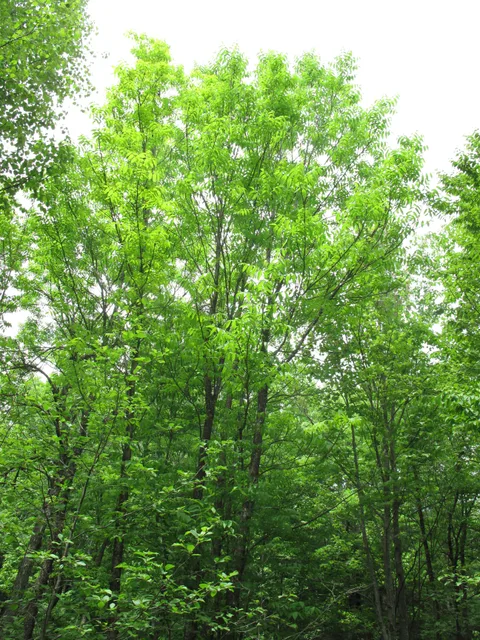
Identification
Leaves
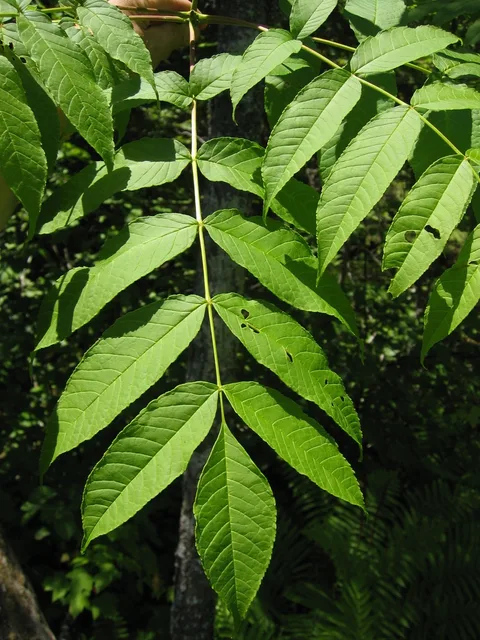
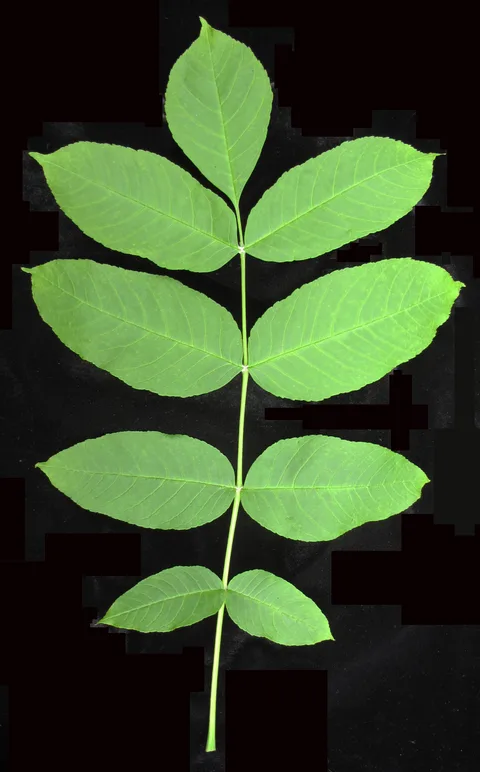
Opposite compound leaves with 7-11 leaflets that sit directly on the central stalk with no stalks of their own; white and green ash leaflets are stalked. Look for dense tufts of reddish-brown hairs where each leaflet joins the stalk. Both surfaces are dark green. In fall the whole leaf usually drops at once, after turning a dull reddish-brown.
Leaves
Bark
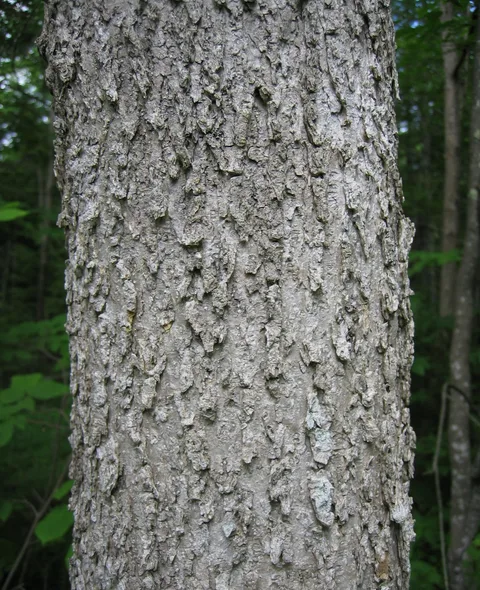
Light grey, soft bark with corky ridges that crumble when you rub them with your palm, unlike the firm, diamond-patterned bark of white and green ash. Older trees become scaly.
Bark
Flowers
Small petal-less flowers in loose clusters open in May, before the leaves. Trees can carry male, female and bisexual flowers, and clusters are more often at the twig tip than on other ashes.
Fruit
Samaras 2.5-4 cm (1-1.5 in) long with a broad, often twisted wing that runs all the way down a flat seed case. Clusters hang on the tree into winter. Good seed crops come only every few years, and seeds often take 2-3 years to germinate.
Valuable wildlife food source
Growing Conditions
Climate
Very cold hardy; its range extends further north than any other Ontario ash, to about 51 degrees latitude. It needs wet, poorly drained sites and full sun, so it suits Bay of Quinte lowlands and Shield-edge swamps rather than upland lawns or salted streets.
Hardiness Zones: 2, 3, 4a, 4b, 5a, 5b
Light Requirements
Soil
Moisture: wet, moist
Drainage: poor, moderate
pH Range: 4.4 - 8.2
Tolerance
Care & Maintenance
Pruning
Best Season: Winter
Frequency: Rarely pruned; work is usually limited to hazard reduction
- Confirm the species and check the current Ontario rules before cutting a living Black Ash; activities that affect a protected species may need registration or a permit
- Remove only dead, broken or hazardous limbs, during dormancy
- Keep ash wood and firewood local to avoid spreading emerald ash borer
Avoid: Spring and early summer, while trees leaf out and adult emerald ash borers are flying; Any work before the legal status of the tree has been checked
Watering
Establishment: Keep the soil constantly moist; this is a swamp tree
Mature: Needs wet or seasonally flooded ground; tolerates standing water for weeks
Seasonal Care Timeline
Spring
- Check for ice and storm damage on trees near buildings and trails
- High water and saturated soil increase the risk of uprooting
- Check species-at-risk rules before planning any clearing
Summer
- Adult emerald ash borers are flying and laying eggs
- Look for crown thinning while trees are in leaf
- Drought or drained sites stress trees
Fall
- Leaves turn reddish-brown and drop early; this is normal
- Plan any approved tree work for the dormant season
Winter
- Freezing rain loads weak limbs and shallow-rooted stems
- Woodpecker damage is a sign of EAB larvae
- Keep ash firewood local
Common Issues
Emerald Ash Borer
SevereThe invasive beetle that attacks every ash species and the reason Black Ash is now an endangered species in Ontario; the province expects it to reduce Black Ash numbers by more than 70% over the next two generations (about 100 years).
Symptoms: Thinning crown and branch dieback from the top, Small D-shaped exit holes in the bark, S-shaped larval galleries under split bark, Heavy woodpecker feeding on the trunk, Sprouts along the trunk
Treatment: Infested trees generally die within 2-3 years. Systemic trunk injection can protect individual healthy trees. Because Black Ash is a protected species in Ontario, check the current provincial requirements with a professional before any removal.
Prevention: Do not move ash firewood or logs; report suspected EAB outside regulated areas to the CFIA
Professional arborist recommended
Windthrow and Ice Breakage
HighBlack Ash has a shallow, wide-spreading root system in soft, wet soil and wood that is not particularly strong. Windstorms are the most common disturbance in black ash stands, and the tree is highly susceptible to ice damage.
Symptoms: Leaning or uprooted trees after storms, Broken tops and limbs after freezing rain, Root plates lifting in saturated ground
Treatment: Have storm-damaged trees near buildings, trails or roads assessed; confirm legal status before removal of any living tree
Prevention: Avoid draining, filling or compacting the wet ground around existing trees
Professional arborist recommended
Cankerworms
LowFall and spring cankerworm caterpillars feed on ash foliage in spring.
Symptoms: Ragged, chewed leaves in late spring, Small green 'inchworm' caterpillars hanging on silk
Treatment: Usually tolerated; healthy trees refoliate
Prevention: Keep trees vigorous; natural enemies normally control outbreaks
Sources & References
Information compiled from the following authoritative sources:
Quick Facts
When to Call an Arborist
Recommended inspection: Annually for trees near buildings or trails, and before any planned work
- •Any crown thinning, dieback or D-shaped exit holes
- •Woodpecker damage on the trunk
- •A lean that is getting worse or soil heaving at the base
- •Broken tops after an ice storm
- •Any plan to clear, build, drain or grade within 30 m of a living Black Ash
Free consultation for Belleville residents
Recommended Services
Based on Black Ash characteristics