
Honey Locust
Gleditsia triacanthos
Overview
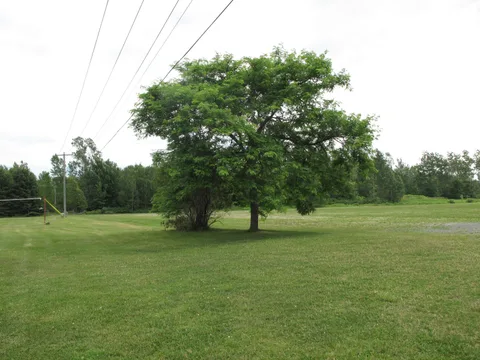
Thornless honey locust is a familiar street, boulevard and parking-lot tree in Belleville and across southern Ontario, valued for its light shade, small leaves that need little raking, and tolerance of road salt and tight, dry planting sites. It has often been chosen to replace street trees lost to Dutch elm disease and other die-offs. Honey locust is native to Ontario only in parts of Southwestern Ontario near Lake Erie, so around Belleville it is a planted tree outside its natural range.
Honey locust wood is dense and durable and was used for fence posts and, historically, for bows. Its sweet pods were eaten by livestock and have been used to make beer. The thornless variety was widely planted in North American towns to replace elms killed by Dutch elm disease.
Full Tree
Identification
Leaves
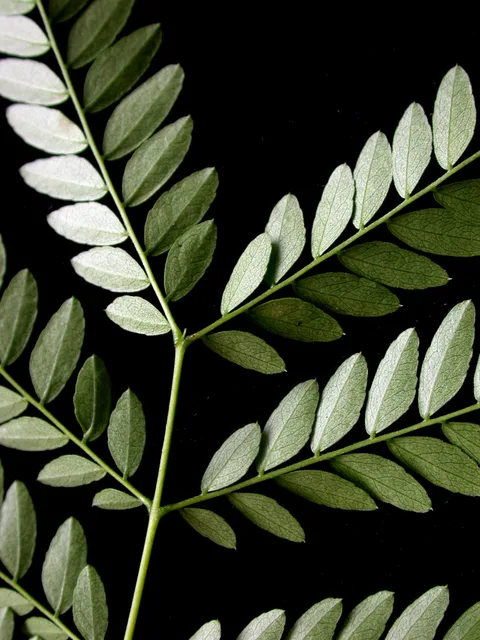
Fine, feathery compound leaves made up of many small leaflets 25 to 40 mm long, with rounded or pointed tips. Some leaves are divided twice. The small leaflets cast light, dappled shade, so lawns grow well underneath, and they turn yellow and drop early in fall.
Leaves
Bark
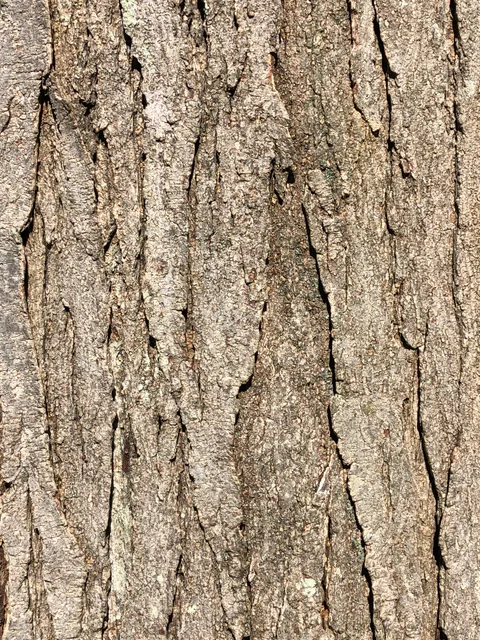
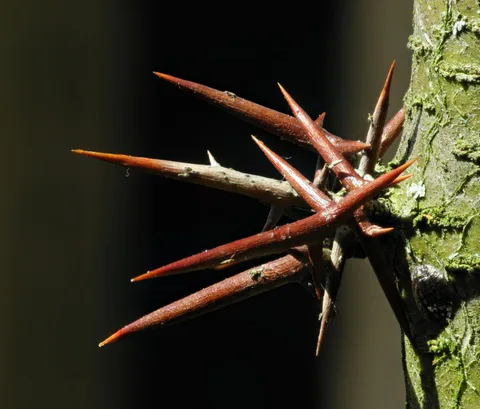
Brown bark that is smooth with horizontal markings when young and becomes furrowed and ridged with age. On wild-type (thorny) trees, stout branched thorns can cover the trunk and large limbs; the cultivars planted on streets and in yards are thornless.
Bark
Flowers
Small greenish-white flowers in clusters 5 to 9 cm (2-3.5 in) long open in late spring as the leaves expand. They are easy to miss but are a food source for bees.
Fruit
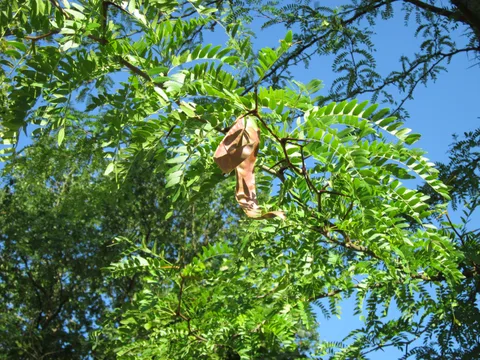
Flat, leathery, often twisted brown pods 15 to 40 cm (6-16 in) long, ripening in October in the north and falling through fall and into late winter. Deer and squirrels eat them. Many thornless cultivars produce few or no pods, which is part of their appeal for streets and driveways.
Valuable wildlife food source
Growing Conditions
Climate
Cold hardy in zone 5b when grown from northern stock. Honey locust keeps growing late into the season, so the soft tips on young trees are often killed by the first fall frost; new growth comes from lower buds in spring. It grows in the clay of the Bay of Quinte lowlands, but poorly in heavy, compacted clay or very shallow soils, so give it a large planting area. It is very drought and salt tolerant once established.
Hardiness Zones: 4a, 4b, 5a, 5b
Light Requirements
Soil
Moisture: dry, moist
Drainage: well-drained, moderate
pH Range: 6 - 8
Tolerance
Care & Maintenance
Pruning
Best Season: Winter
Frequency: Structural pruning every 2-3 years while young; every 5 years or so once mature
- Train young trees to one central leader with well-spaced main limbs; remove competing leaders early
- Raise the crown gradually over sidewalks, driveways and roads rather than removing large limbs at once
- Remove sprouts from the base of the trunk: on grafted trees they can grow from the rootstock and may be thorny
- Prune out dead and cankered branches back to healthy wood, in dry weather
- Avoid unnecessary wounds, including mower and trimmer damage to the trunk; cankers and decay start at injuries
Avoid: Heavy pruning during spring leaf-out; Wet weather, when wounds stay damp
Watering
Establishment: Water deeply once a week in dry spells for the first 2-3 summers after planting
Mature: Very drought tolerant once established
Seasonal Care Timeline
Spring
- Plant bug feeding on new leaves in late May and early June
- Prune off shoot tips killed by the previous fall's frost
- Watch for wilting branches that may signal canker
Summer
- Spider mites in hot, dry spells
- Webbed, browning foliage from mimosa webworm by August
- Drought stress in small boulevard pits; water young trees
Fall
- Pods dropping from seed-bearing trees from October into winter
- Small leaflets drop early and fall into eavestroughs
- Good time to plant or replace boulevard trees
Winter
- Dormant season is the best time for structural pruning
- Look for thorny sprouts at the base of grafted trees
- Road salt spray along busy streets
Common Issues
Honey Locust Plant Bug
LowSmall green plant bugs whose nymphs hatch as the buds open and feed on the new leaves. Damage is mostly cosmetic and an outbreak one year does not mean another the next.
Symptoms: Distorted, puckered new leaflets, Yellow to brown spotting, Thin crown or early leaf drop in late May and June, A second flush of leaves after heavy feeding
Treatment: Usually none; trees recover with a second flush of leaves. Insecticide is only warranted when populations are very high or damage repeats several years in a row
Prevention: Keep trees vigorous with watering in drought and mulch over the root zone
Mimosa Webworm
ModerateA small moth whose caterpillars web honey locust leaflets together and skeletonize them. All thornless cultivars can be attacked; 'Sunburst' is the most susceptible, and 'Shademaster', 'Skyline', 'Moraine' and 'Imperial' are less so. It is mainly a problem in warmer cities to the south, but it is worth recognising.
Symptoms: Leaflets webbed together in clusters, Skeletonized, browning leaflets, Crown looking scorched by August, White cocoons on trunks or nearby buildings in fall
Treatment: Prune out small webbed areas; heavy infestations on valuable trees can be treated in late June and again in late July with a product that targets young caterpillars
Prevention: Avoid planting large numbers of a single cultivar; avoid broad-spectrum sprays that kill the natural enemies of webworms and mites
Spider Mites
LowMites, including a honey locust spider mite, feed on the leaflets. Heavy infestations build up in hot, dry weather and can defoliate a tree; broad-spectrum insecticides used against other pests can make them worse.
Symptoms: Fine yellow stippling on leaflets, Bronzed or greyish foliage, Early leaf drop in hot, dry summers
Treatment: Water drought-stressed trees; a strong water spray or horticultural oil applied by an arborist for heavy infestations
Prevention: Water during drought; avoid broad-spectrum insecticides
Thyronectria Canker
HighA fungal canker (Thyronectria austroamericana) that is the most important disease of honey locust and can be fatal. It mainly attacks trees already stressed by drought, poor soil, wounds or a cramped planting site.
Symptoms: Elongated, slightly sunken cankers with callus ridges at the edges, Dead bark that is orange-brown at first and later bleaches to bright yellow-orange, Wilting or yellowing foliage beyond the canker, Branch dieback in the crown
Treatment: Fungicides do not control cankers. Prune out cankered branches well below the canker in dry weather; trees with trunk cankers that girdle much of the stem are usually removed
Prevention: Reduce stress: water in drought, mulch, avoid trunk wounds, plant in an adequate soil volume
Professional arborist recommended
Honey Locust Borer
LowA wood-boring beetle whose larvae can tunnel under the bark and through larger branches. It is not a common problem in Ontario, but its damage is often mistaken for emerald ash borer.
Symptoms: Exit holes and bark damage on stressed trees, Branch dieback, Woodpecker activity
Treatment: Have an arborist confirm the identification before acting; remove dead and heavily infested branches
Prevention: Keep trees vigorous; borers favour stressed trees
Professional arborist recommended
Sources & References
Information compiled from the following authoritative sources:
Quick Facts
When to Call an Arborist
Recommended inspection: Every 2-3 years; yearly for boulevard and parking-lot trees
- •Sunken or discoloured bark cankers on the trunk or main limbs
- •Branch dieback or wilting sections of crown
- •Webbed, brown foliage in midsummer
- •Holes or bark damage you suspect is emerald ash borer (honey locust borer is a common look-alike)
- •Thorny sprouts coming from the base of a thornless tree
- •Competing leaders or tight forks on a young tree
Free consultation for Belleville residents
Recommended Services
Based on Honey Locust characteristics