
Tamarack
Larix laricina
Active Threats to Tamarack
Larch Casebearer
Ontario's 2025 forest health survey mapped moderate to severe larch casebearer defoliation of tamarack in eastern Ontario, including along Highway 62 at Millbridge in Hastings County, north of Marlbank, and in Central Frontenac. The tiny moth larvae mine the needles in spring. One year of feeding rarely kills a tree, but trees completely defoliated for two or more years can die and become targets for eastern larch beetle.
Signs to watch for:
- •Tamarack needles turning light brown and hollow in May and June
- •Tree looks scorched or tan from a distance in spring
- •Tiny light brown cigar-shaped cases on needles and twigs
Recommended Action: If a yard tamarack browns in spring two years running, have it checked. Water it through dry spells, and have a professional assess whether protection is worthwhile.
Free consultation available
Overview
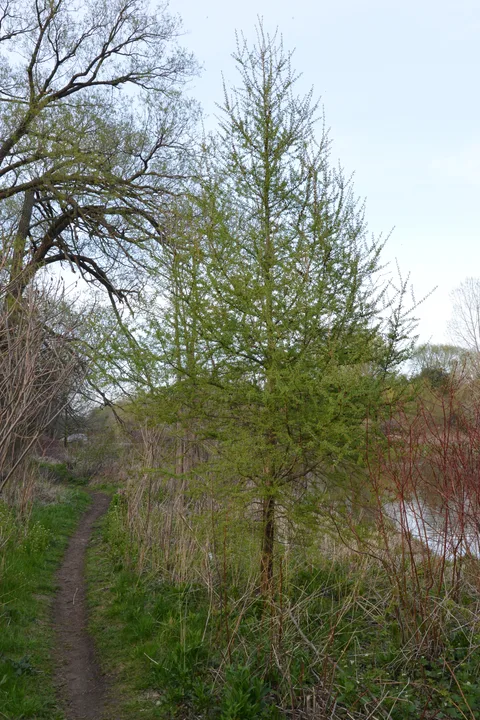
Ontario's only native deciduous conifer. Around Belleville it grows wild mainly in bogs, swamps and wet, acidic lowlands north of the city and on the Canadian Shield, often mixed with black spruce and eastern white cedar. It is planted in yards for its soft texture and gold late-fall colour, and is one of the few conifers that will grow in a sunny, poorly drained low spot.
Tamarack wood was used for posts, poles, railway ties and wooden ships, and tannins extracted from the bark were used to tan leather.
Full Tree
Identification
Leaves
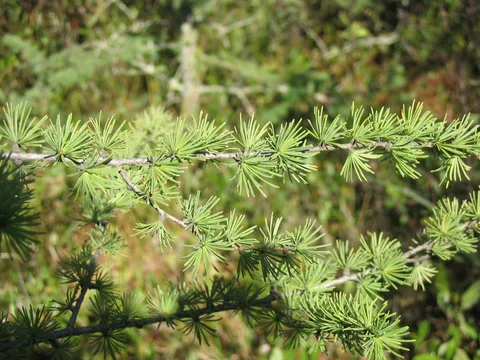
Soft, flexible, bluish-green needles 2-3 cm (about 1 inch) long, borne in starburst tufts of 10-20 or more on short spur shoots, and singly along new shoots. Tamarack is a deciduous conifer: the needles turn bright yellow to gold in fall and drop, so a bare tamarack in winter is not dead.
Leaves
Bark
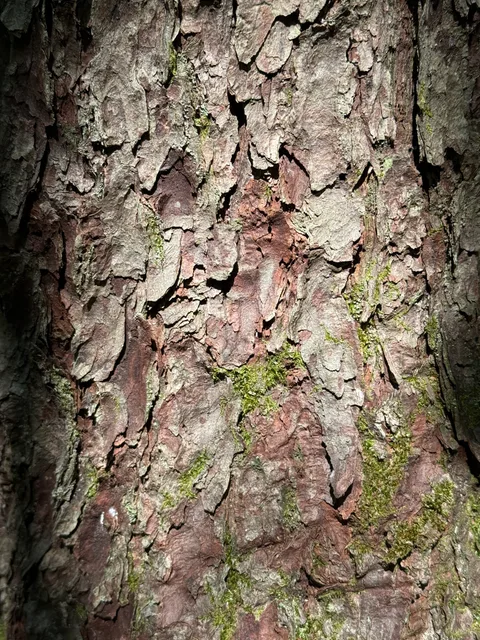
Thin and smooth grey on young trees, becoming reddish-brown and broken into small, flaky scales with age.
Bark
Flowers
Rosy-red to pink seed conelets and small yellowish pollen cones appear on the spur shoots in spring as the new needles emerge.
Fruit
Small, upright, light brown cones only 1-2 cm (under 1 inch) long. Cones begin opening in mid-August and shed seed over the following months; trees rarely produce seed before about age 10.
Valuable wildlife food source
Growing Conditions
Climate
Extremely cold-hardy and found in every province and territory, but most common in northern Ontario. Here it is near the warm, dry edge of its comfort zone: it needs full sun and steady moisture and suffers in hot, dry summers. It tolerates wet clay, so it can suit low, poorly drained corners of Quinte-area lots where other conifers fail, provided it gets full sun and no shade from neighbours.
Hardiness Zones: 2a, 2b, 3a, 3b, 4a, 4b, 5a, 5b
Light Requirements
Soil
Moisture: moist, wet
Drainage: well-drained, moderate, poor
pH Range: 5 - 7.4
Tolerance
Care & Maintenance
Pruning
Best Season: Winter
Frequency: Minimal; remove dead, broken or crossing branches only
- Prune while dormant, when the bare branches make structure easy to see
- Keep the single central leader; do not shear or top
- Bare branches in winter are normal; scratch a twig to check for green tissue before removing anything
- Remove dead and dying trees promptly; they breed eastern larch beetle
Avoid: Spring needle flush and shoot growth; Hot, dry spells in summer
Watering
Establishment: Keep the root zone consistently moist through the first two or three growing seasons; plant in spring before bud break or while dormant
Mature: Thrives in moist to wet soil; on upland lawns it needs regular deep watering in dry summers
Seasonal Care Timeline
Spring
- Larch casebearer feeding shows as brown, hollow needles in May and June
- Eastern larch beetle adults emerge in May and attack stressed trees
- A tree that still looks bare in early spring may simply not have flushed yet; check twigs for live green tissue before assuming it is dead
Summer
- Larch sawfly larvae feeding on needles
- Drought and heat stress on upland or lawn sites; water deeply
- Yellowing in late July or August can signal eastern larch beetle
Fall
- Gold needle colour and needle drop in October and November are normal
- Look for tiny casebearer cases near the buds on bare twigs
- Good time to plant a container-grown tamarack while the soil is moist
Winter
- Bare branches are normal; the tree is deciduous
- Road salt spray and salty meltwater near driveways and roads
- Dormant season is the best time for structural pruning and removals
Common Issues
Larch casebearer
ModerateA small moth introduced from Europe (found in Ontario since 1905) whose larvae mine the needles of tamarack and European larch. Infestations recur roughly every eight years. In 2025 provincial surveys mapped moderate to severe defoliation of tamarack in Hastings County along Highway 62 at Millbridge and at several other sites across eastern Ontario.
Symptoms: Light brown, dried-out, hollow needles in spring, Tree looks scorched or tan from a distance in May and June, Tiny light brown cigar-shaped cases attached to needles and twigs, Cases visible near the buds on bare twigs in autumn
Treatment: Two introduced parasitic wasps keep most outbreaks in check. Insecticide can protect valuable yard trees; an arborist can check whether a tree needs it.
Prevention: Keep trees vigorous with water in dry summers. A single year of feeding rarely kills, but trees completely defoliated for two or more years can die and are open to eastern larch beetle.
Larch sawfly
ModerateA sawfly whose larvae feed on tamarack needles. Repeated heavy defoliation weakens trees, and eastern larch beetle is often found in stands previously hit by larch sawfly.
Symptoms: Groups of caterpillar-like larvae feeding along branches in summer, Branch ends stripped of needles, Thin, patchy crowns
Treatment: Light infestations on small trees can be pruned out or knocked off by hand; heavy infestations on yard trees can be treated by a licensed applicator.
Prevention: Watch crowns through the summer and act early on young or stressed trees.
Eastern larch beetle
HighA native bark beetle about 4 mm long that bores into the inner bark and sapwood of larch. It attacks trees already stressed by defoliation, flooding, drought or other disturbance, can complete two generations a summer, and severe attacks girdle and kill the tree. In towns, declining tamaracks are often severely attacked.
Symptoms: Crown yellowing by late July or early August, well before normal fall colour, Long resin flows on the trunk, Dark brown boring dust in bark crevices and at the base, Small round entry holes in the bark
Treatment: No cure once a tree is girdled. Prompt removal of sick and dead trees, with bark stripping or chipping of the wood, keeps beetle numbers from building.
Prevention: Keep trees free of stress and control defoliators; do not leave dead or dying larch standing near healthy ones.
Professional arborist recommended
Drought, heat and windthrow
ModerateTamarack is a cold-climate tree of wet ground that dislikes heat and drought, and its shallow, wide-spreading roots leave it prone to blowing over. Yard trees on dry, upland lawns or in cut-over sites decline after hot, dry summers.
Symptoms: Early yellowing and needle drop in mid-summer, Thin new growth and short tufts, Root plate lifting or trees leaning after high winds on saturated soil
Treatment: Deep watering and mulch during dry spells; have leaning or root-lifted trees near buildings assessed.
Prevention: Plant in full sun on moist ground, out of the reach of road salt; avoid exposed, dry sites.
Sources & References
Information compiled from the following authoritative sources:
Quick Facts
When to Call an Arborist
Recommended inspection: Every 2-3 years, and the same summer if the crown browns in spring or yellows before late September
- •Crown yellowing in July or August, long before normal fall colour
- •Resin streaks or brown boring dust on the trunk
- •Needles that brown in spring two years in a row
- •No new needles by late May (check twigs for live green tissue)
- •Leaning trunk or lifted root plate after a storm
Free consultation for Belleville residents
Recommended Services
Based on Tamarack characteristics