
Ironwood
Ostrya virginiana
Overview
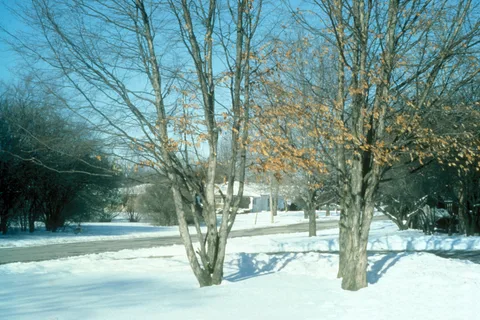
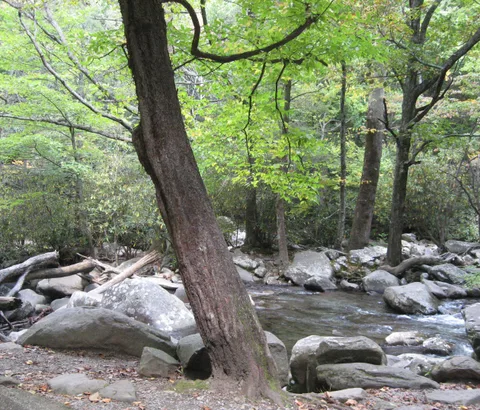
A native understory tree of Southern Ontario hardwood woodlots, usually growing under sugar maple, beech and basswood on well-drained slopes and ridges. It has the hardest and densest wood of any Canadian tree. Watch the name: Ontario's Tree Atlas also lists 'ironwood' as a common name for blue beech (Carpinus caroliniana), a different tree. Ironwood (hop-hornbeam) has shreddy, strip-peeling bark, hop-like clusters of papery fruit sacs and grows on dry, well-drained ground; blue beech has smooth, grey, muscle-like fluted bark, nutlets held in leaf-like bracts, and grows on moist sites that can flood.
Its hard, dense wood was used for tool handles, mallets and fence posts. It burns well as firewood but is tough to split.
Full Tree
Identification
Leaves
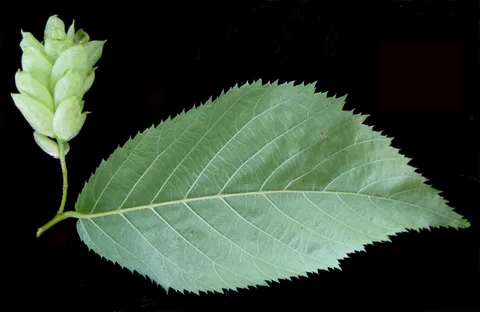
Birch-like oval leaves with a pointed tip and sharp, double teeth. Dark yellowish-green, soft and almost felt-like, with a hairy underside. Leaves get larger toward the tip of each shoot, and shaded lower leaves can be much bigger than those high in the crown.
Leaves
Bark
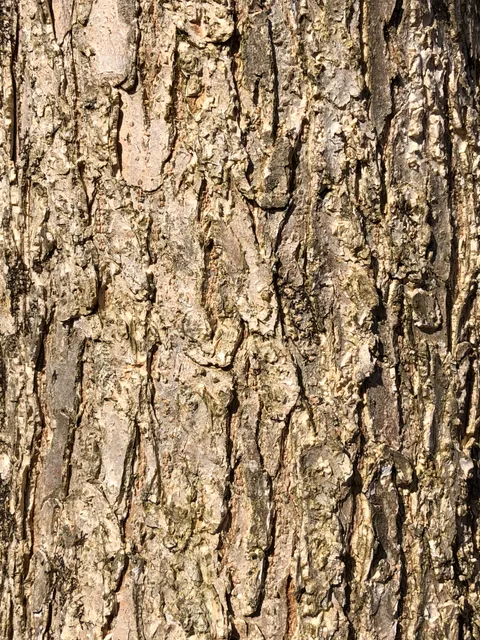
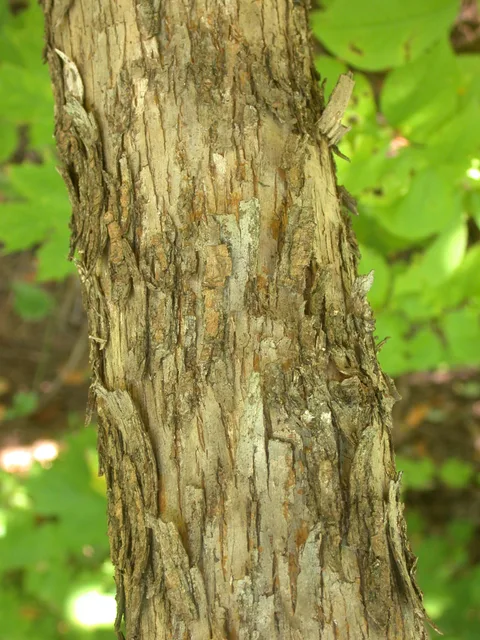
The best year-round clue: greyish-brown bark broken into short, narrow, vertical strips that are loose at both ends and easily rubbed off, giving the trunk a finely shaggy look. Young stems are smooth and reddish-brown and can be confused with young birch.
Bark
Flowers
Male catkins are visible through the winter, hanging in groups of 2-3 at the twig tips, lengthening to 15-50 mm when they open in April and May as the leaves emerge. The small female flowers are clustered at the tips of the new leafy shoots.
Fruit
Each small flattened nut (5-8 mm) sits inside an inflated, papery sac about 15 mm long and covered in stiff hairs. The sacs hang in clusters that look like hops, which gives the tree its other name, and drop over the winter. Ruffed grouse, rose-breasted grosbeaks, red squirrels and white-tailed deer feed on the seeds, buds and catkins.
Valuable wildlife food source
Growing Conditions
Climate
Hardy and tolerant of shade, drought and dry, shallow, rocky soils, as long as they drain well (soil pH from about 4.2 to 7.6 has been recorded), which suits the shallow soils over limestone and Shield rock around Belleville. Its tough branches resist wind, snow and ice damage. Its weak points are flooding, road salt and polluted roadside conditions, so it suits a woodland edge or shady garden far better than a boulevard.
Hardiness Zones: 3, 4a, 4b, 5a, 5b
Light Requirements
Soil
Moisture: dry, moist
Drainage: well-drained
pH Range: 4.2 - 7.6
Tolerance
Care & Maintenance
Pruning
Best Season: Winter
Frequency: Rarely needed
- Prune in winter while dormant
- Remove dead or crossing branches and any competing leaders on young trees
- Little pruning is needed: the tough branches rarely fail
- Leave the lower branches on understory trees where space allows
Avoid: Spring leaf-out, when the bark tears easily; Drought periods, when the tree is already stressed
Watering
Establishment: Mulch and water regularly until established: it is slow to re-root after transplanting
Mature: Drought-tolerant once established; does not survive flooding or waterlogged soil
Seasonal Care Timeline
Spring
- Male catkins open in April and May
- Watch for spongy moth larvae in late May
- Do not transplant once leaves have opened
Summer
- Spongy moth feeding through June
- Water young trees in drought
- Check for dieback that might signal borers
Fall
- Dull yellow fall colour
- Papery fruit clusters ripen and feed birds and squirrels
- Look for spongy moth egg masses
Winter
- Catkins and buds feed ruffed grouse
- Keep salt and plowed snow off the root zone
- Good time for light structural pruning
Common Issues
Road Salt Injury
ModerateIronwood does not tolerate road salt or polluted roadside conditions; it is very sensitive to de-icing salt.
Symptoms: Browned leaf edges and tips on the street side, Dieback of twigs facing a road or driveway, Thin, slow growth near salted pavement
Treatment: Flush soil with water in spring; move salt storage and snow piles away from the root zone
Prevention: Plant well back from salted roads, walks and driveways and use non-chloride de-icers nearby
Flooding, Compaction and Grade Changes
ModerateAn upland tree of well-drained slopes and ridges that cannot survive flooding. Construction that compacts soil, raises grade or ponds water over the roots causes slow decline.
Symptoms: Thinning crown and short shoot growth, Dieback starting at the top, Decline a few years after nearby construction or drainage changes
Treatment: Restore drainage and loosen compacted soil where possible; an arborist can assess the root zone
Prevention: Fence off the root zone during construction and keep downspouts and pooled water away
Professional arborist recommended
Spongy Moth
ModerateInvasive defoliator (formerly LDD or gypsy moth). Ironwood is one of the first trees in a woodlot to be stripped during outbreaks.
Symptoms: Hairy caterpillars with paired blue and red spots, Leaves eaten from the edges in late May and June, Tan, fuzzy egg masses on bark
Treatment: Scrape and destroy egg masses; healthy trees normally refoliate
Prevention: Check trunks for egg masses in fall and winter
Two-lined Chestnut Borer
ModerateA native wood-boring beetle that can attack ironwood that is already stressed by drought, defoliation or root damage.
Symptoms: Dieback of upper branches, Small D-shaped exit holes in the bark, Winding tunnels under loose bark
Treatment: Remove dead and dying branches; improve tree vigour with watering and mulch
Prevention: Avoid root injury and water during drought, especially in years after defoliation
Professional arborist recommended
Nectria Canker and Trunk Rots
LowFew diseases are serious on ironwood, but Nectria canker and decay fungi such as tinder conk can affect older or wounded trunks.
Symptoms: Target-shaped sunken cankers with ridges of callus, Hoof-shaped conks on the trunk, Soft or hollow wood at old wounds
Treatment: Prune out cankered branches in dry weather; have conks on the trunk assessed
Prevention: Avoid trunk wounds from mowers and trimmers
Sources & References
Information compiled from the following authoritative sources:
Quick Facts
When to Call an Arborist
Recommended inspection: Every 5 years, or after construction near the root zone
- •Crown dieback after nearby construction or drainage changes
- •Conks or cankers on the trunk
- •D-shaped holes and dying upper branches
- •Repeated heavy defoliation
Free consultation for Belleville residents
Recommended Services
Based on Ironwood characteristics