
White Spruce
Picea glauca
Overview
Ontario's widespread native spruce and the most common spruce in Belleville-area yards, rural windbreaks, hedgerows and old farm plantings. It also seeds into abandoned fields across Prince Edward County, Quinte West and the Hastings County farm belt, and grows wild on the Canadian Shield north of Highway 7.
Called pasture spruce for the way it invades abandoned farmland in eastern Canada. Widely planted across Ontario for reforestation, windbreaks and Christmas trees, and still a major pulp and lumber species in the north.
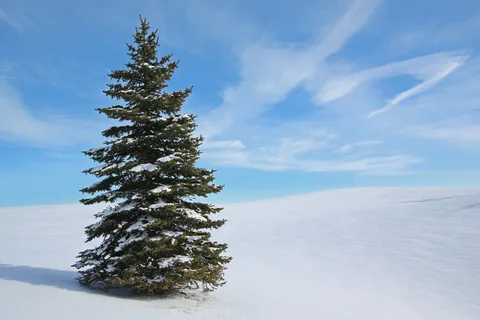
Full Tree
Identification
Leaves
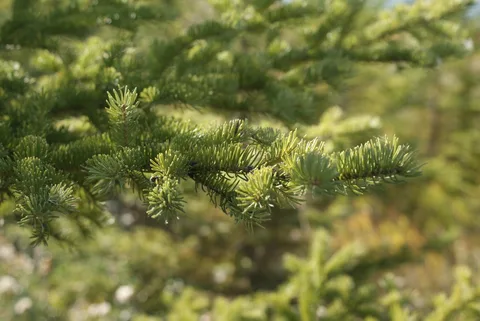
Stiff, four-sided needles 1.5-2.2 cm (about 3/4 inch) long, green to bluish-green with lines of white dots on all sides, set singly all around the twig. Crushed needles give off a sharp, unpleasant smell often described as skunky or like cat urine, which is where the names 'skunk spruce' and 'cat spruce' come from. The tips are pointed but not prickly like Colorado blue spruce.
Leaves
Bark
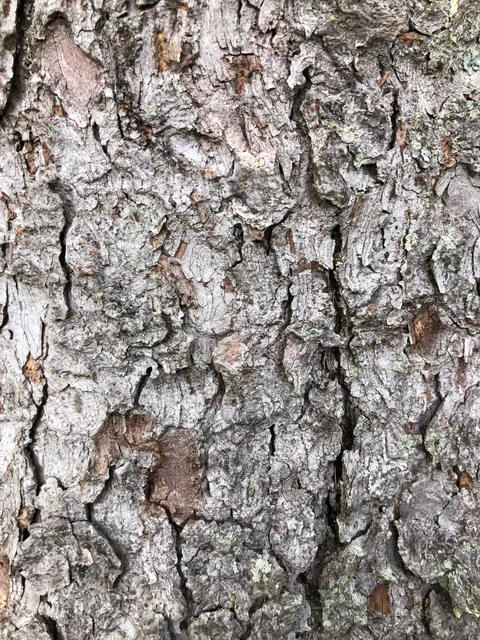
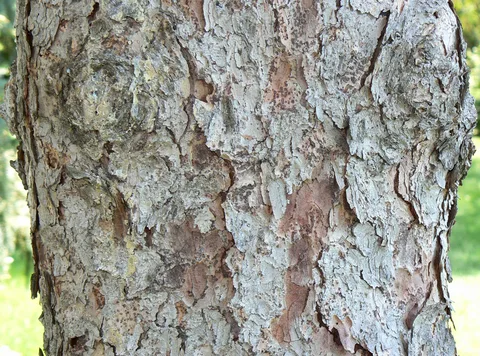
Smooth, thin and light grey on young trees, becoming grey-brown and flaky with age. Freshly exposed bark under a fallen scale is salmon-pink to silvery. The bark stays thin throughout life, so trunks are easily wounded by mowers, string trimmers and equipment.
Bark
Flowers
Male (pollen) and female (seed) cones form on the same tree. Pollen is shed in late spring to early summer, and the receptive female cones are small and reddish to purple for a few days at that time.
Fruit
Slender, cylindrical, stalkless cones 3-6 cm (1.25-2.5 inches) long with thin, flexible, smooth-edged scales that do not break when a dry cone is squeezed. Cones ripen in late summer, shed their seed from late summer through spring, and do not stay on the tree for years the way black spruce cones do. Squirrels, crossbills and other birds feed on the seed.
Valuable wildlife food source
Growing Conditions
Climate
Very cold-hardy, growing from southern Ontario to the arctic tree line. It does best in cool, moist conditions; on the hot, dry summers of southern Ontario's urban lots and on heavy, compacted Bay of Quinte clay it is more prone to drought stress, canker and mites. New shoots can be nipped by late spring frost.
Hardiness Zones: 2, 3, 4a, 4b, 5a, 5b
Light Requirements
Soil
Moisture: moist, dry
Drainage: well-drained, moderate
pH Range: 4.7 - 8
Tolerance
Care & Maintenance
Pruning
Best Season: Winter
Frequency: Light structural pruning every few years; mature trees need little beyond removing dead or broken limbs
- Prune in late winter, before new growth starts, and only in dry weather to avoid spreading Cytospora canker
- Disinfect tools between cuts on trees showing branch dieback (70% alcohol or 10% bleach)
- Keep a single leader; if the leader is killed by white pine weevil, choose one healthy side shoot to take over and remove competing ones
- Do not top or shear back into old wood; spruce will not resprout from bare branches
- Leave lower limbs on windbreak and screen trees where possible; they shelter the roots and keep the screen dense
Avoid: Wet spring and summer weather, when canker spores spread; Late spring during bud break and shoot elongation
Watering
Establishment: Water deeply once a week through the first two growing seasons, more on sandy fill
Mature: Usually self-sufficient on moist loam or clay; struggles on hot, dry, compacted lots
Seasonal Care Timeline
Spring
- Check for road-salt browning and winter breakage
- Spruce budworm and spider mites active on new shoots
- Look for wilted, hooked leaders from white pine weevil
- Prune dead branches in dry weather before bud break
Summer
- Yellowheaded spruce sawfly feeding on new needles in June
- Drought stress on shallow-rooted trees in July-August
- Watch for branch dieback and white resin (Cytospora canker)
- Cut out weevil-killed leaders before adults emerge
Fall
- Second round of spruce spider mite activity
- Deep watering before freeze-up, especially on young or roadside trees
- Have large spruce near buildings checked before ice-storm season
Winter
- Heavy wet snow and freezing-rain ice on dense crowns
- Windthrow of shallow-rooted trees on wet or shallow soils
- Road-salt spray along roads and driveways
- Plow damage to low branches and thin bark
Common Issues
Spruce Budworm
ModerateNative caterpillar whose larvae feed on buds, new shoots and older needles of spruce and balsam fir. Large outbreaks are cyclical and mostly in northern Ontario forests, but open-grown yard and windbreak spruce can be defoliated locally. Repeated heavy defoliation reduces growth and can kill trees.
Symptoms: Webbed, chewed new shoots in late spring, Reddish-brown cast to the crown in early summer from clipped, dried needles, Small brown caterpillars on the shoot tips, Top-down thinning after several years of feeding
Treatment: On individual high-value trees, a professional can apply a biological insecticide (Bacillus thuringiensis) timed to young larvae at bud break. Remove trees killed by repeated defoliation before they become hazards.
Prevention: Keep trees vigorous with watering in drought; mixed plantings with deciduous trees are less affected than pure spruce and fir stands.
Professional arborist recommended
Yellowheaded Spruce Sawfly
ModerateSawfly larvae with yellow-brown heads that strip new needles, worst on open-grown, young plantation, hedge and windbreak spruce. Two or more years of heavy feeding can seriously reduce growth or kill young trees.
Symptoms: Current-year needles eaten down to the twig in early summer, Groups of greenish larvae with yellow-brown heads on shoot tips, Bare shoot tips at the top of young trees
Treatment: Hand-pick or prune off small colonies; insecticidal soap or other registered products on young larvae. Large trees need professional application.
Prevention: Inspect young spruce, hedges and windbreaks in June, when larvae are small and damage is easiest to stop.
White Pine Weevil
ModerateNative weevil whose grubs tunnel inside the top leader of young pine and spruce. White spruce is less susceptible than pine but is attacked, especially young trees in full sun. The dead leader produces a crooked or multi-stemmed top.
Symptoms: Top leader wilts and curls into a 'shepherd's crook' by early summer, Small resin droplets and pin-sized holes on the previous year's leader in spring, White legless grubs and chip-like cocoons under the bark of the dead leader, Forked or bushy tops on trees attacked in earlier years
Treatment: Cut out the wilted leader below the damage as soon as it is noticed, before adults emerge in late summer, and destroy it. Train one side shoot as the new leader.
Prevention: Check leaders on young trees each spring; protective sprays on leaders in early spring are possible for small, valuable plantings.
Spruce Spider Mite
ModerateTiny cool-season mites that suck sap from needles, building up in spring and again in fall. Hot, dry sites and dusty roadsides make outbreaks worse. Continuous attacks can eventually kill branches or the tree.
Symptoms: Faded, stippled, greyish or rusty-brown needles, starting on the inner and lower crown, Fine webbing between needles, Tiny moving specks when a branch is tapped over white paper
Treatment: Dormant horticultural oil for overwintering eggs, or a low-rate summer oil or registered miticide in spring and fall. Oil temporarily darkens the waxy blue-green bloom on the needles.
Prevention: Water during drought and avoid broad-spectrum insecticides that kill the mites' predators.
Cytospora Canker
HighFungal canker that kills spruce branches, usually on stressed trees about 15 years and older. Blue spruce is the most common host, but white spruce is also attacked. Drought, compacted or poorly drained soil, needle cast and spider mites all predispose trees.
Symptoms: Lower branches die first and the dieback moves up the tree, Needles turn purple, then brown, and drop, Bluish-white resin streaks or crusts on affected branches, Sunken, dead patches of bark at the base of dying limbs
Treatment: No fungicide is effective. Prune out dead and dying branches in dry weather, cutting well back into healthy wood, and disinfect tools between cuts.
Prevention: Reduce stress: water in drought, mulch, avoid soil compaction and trunk wounds, and space trees so branches do not crowd.
Professional arborist recommended
Rhizosphaera Needle Cast
ModerateFungal needle disease of spruce, most severe on Colorado blue spruce but also seen on other spruces. Older needles on the lower, shaded branches are infected first; repeated years of needle loss leave bare branches that die.
Symptoms: Older needles turn purplish-brown in spring and drop, Rows of tiny black fruiting bodies along the needles, Thinning from the inside and bottom of the crown upward while new growth stays green
Treatment: Confirm the diagnosis first, since mites, canker and drought look similar. Protective fungicide sprays timed to new shoot growth over two or more seasons can help valuable trees.
Prevention: Improve air flow by spacing plantings and removing crowding vegetation; avoid sprinklers wetting the foliage.
Road Salt, Drought and Ice Loading
ModerateWhite spruce is a common windbreak and screen tree along Belleville-area roads and driveways. De-icing salt spray browns the side facing the road, summer drought on shallow or compacted soil stresses its shallow roots, and dense crowns hold heavy wet snow and freezing-rain ice.
Symptoms: Needle browning on the road-facing side by late winter or spring, Thin, sparse crown and short shoots after dry summers, Snapped tops or torn limbs after ice storms, Trees leaning or uprooting on wet or shallow soil after storms
Treatment: Flush salted soil with heavy watering in spring; prune broken limbs back to sound wood; have leaning or root-lifted trees assessed promptly.
Prevention: Plant well back from salted roads, use burlap screens on the road side of young trees, water deeply before freeze-up, and keep a single strong leader.
Sources & References
Information compiled from the following authoritative sources:
Quick Facts
When to Call an Arborist
Recommended inspection: Every 2-3 years for yard trees; after any major ice or wind storm for large spruce near houses, driveways or wires
- •Branches dying from the bottom up with white resin on the bark
- •A new lean, or soil heaving or cracking on one side of the trunk after a storm
- •Large top or multiple leaders split or cracked after ice loading
- •Rapid browning of the whole crown in one season
- •Top-down thinning or webbed, chewed shoots for several years running
- •Fungal brackets or mushrooms at the trunk base (root rot)
Free consultation for Belleville residents
Recommended Services
Based on White Spruce characteristics