
Black Spruce
Picea mariana
Overview
A northern bog and wetland conifer that is rare as a yard tree in Belleville and the Bay of Quinte lowlands. It is more familiar on the Canadian Shield edge north of Highway 7, in North Hastings bogs and fens and in wet hollows on rural acreages, often alongside tamarack. Across Ontario it is a major pulp and paper species.
Its cones can stay on the tree for decades and release seed after fire, so black spruce reseeds quickly after a burn; layering of lower branches is another way it spreads, especially in open, poorer stands.
Full Tree
Identification
Leaves
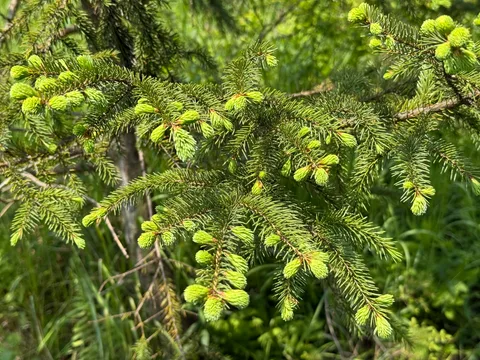
Short, blunt needles 0.8-1.5 cm (about 3/8-5/8 inch) long, densely packed along the twig, dull greyish or bluish-green with white lines of dots more visible underneath. They are about half the length of white spruce needles and lack white spruce's strong skunky smell when crushed.
Leaves
Bark
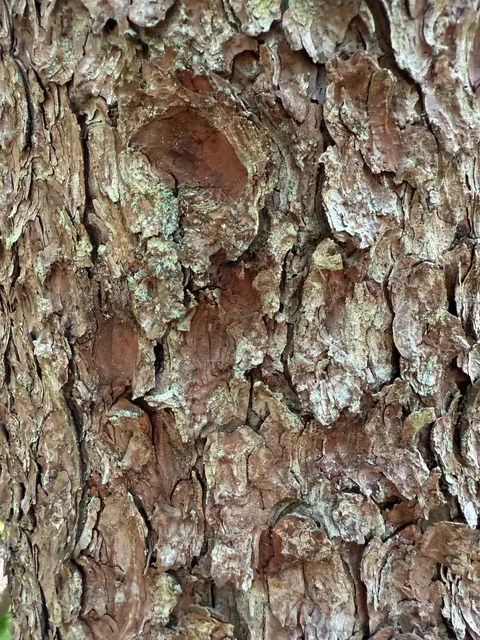
Thin, scaly, grey-brown to reddish-brown bark that darkens with age. Freshly exposed inner bark is olive-green or yellowish-green, unlike the salmon-pink of white spruce.
Bark
Flowers
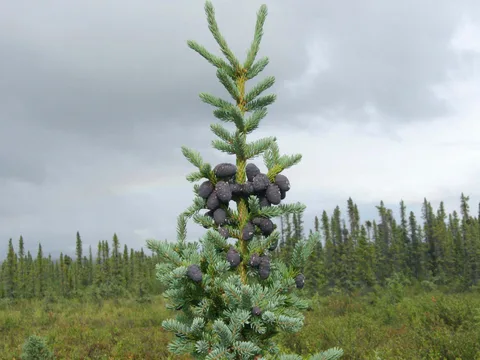
Male and female cones form on the same tree; pollen is shed in late May or early June in southern parts of the range. Young seed cones are deep red to purple and cluster near the top of the tree.
Fruit
Small, egg-shaped cones 2-3 cm (about 1 inch) long, deep purple when young and dark purplish-brown when ripe in September, opening to nearly round. They are clustered near the top of the tree and stay on the branches for many years (up to about 30), releasing seed slowly or all at once after fire. Squirrels and chickadees eat the seed.
Valuable wildlife food source
Growing Conditions
Climate
Extremely cold-hardy; it grows across Canada to the tree line and can root in shallow soil above permafrost. In the southern part of its range, including the Quinte region, it is mostly confined to cool, wet, acidic peat and poorly drained sites, and it does poorly on hot, dry upland lawns.
Hardiness Zones: 1, 2, 3, 4a, 4b, 5a, 5b
Light Requirements
Soil
Moisture: wet, moist
Drainage: poor, moderate, well-drained
pH Range: 4 - 7
Tolerance
Care & Maintenance
Pruning
Best Season: Winter
Frequency: Rarely needed; remove dead, broken or mistletoe-broomed branches
- Prune in late winter in dry weather
- Leave the lower branches and layered offshoots in place on naturalized stands; they are how the species regenerates
- Remove witches' brooms (dense, bushy branch clusters) caused by dwarf mistletoe back to healthy wood
- Do not cut into bare wood; spruce will not resprout from old branches
Avoid: Bud break and shoot growth in late spring; Wet weather, when canker and needle diseases spread
Watering
Establishment: Keep soil consistently moist for the first two to three years; it will not tolerate drying out on upland lawns
Mature: Best on naturally wet or peaty ground; generally a poor choice for dry yards
Seasonal Care Timeline
Spring
- Spruce budworm feeding on new shoots and cones
- Check for leaning or uprooted trees after spring thaw on saturated ground
- Flooding from beaver dams or blocked culverts
Summer
- Drought stress if the water table drops
- Yellowheaded spruce sawfly on young trees
- Thunderstorm windthrow on shallow, wet soils
Fall
- Cones ripen in September and stay on the tree
- Look for witches' brooms once deciduous leaves have dropped
- Inspect trees near cottages and trails before winter storms
Winter
- Ice and heavy snow breaking tops
- Windthrow when soils are saturated and unfrozen
- Road-salt exposure near roads
Common Issues
Spruce Budworm
ModerateBlack spruce is less susceptible to spruce budworm than white spruce or balsam fir, but several years of defoliation during an outbreak can still cause moderate to severe mortality, and larvae also feed on flowers and cones.
Symptoms: Chewed, webbed new shoots in late spring, Reddish-brown cast to the crown in early summer, Thinning from the top down after repeated years of feeding
Treatment: For individual valuable trees, a professional can time a biological insecticide (Bacillus thuringiensis) to young larvae at bud break. Remove dead trees near trails, buildings or roads.
Prevention: Keep mixed stands rather than pure spruce and fir; monitor shoot tips each spring.
Professional arborist recommended
Eastern Dwarf Mistletoe
HighA small parasitic plant that is a destructive parasite of black spruce in eastern Canada and the Lake States. It saps vigour, causes witches' brooms and deformed trees, and can kill many trees in a stand.
Symptoms: Dense, bushy witches' brooms in the crown, Tiny yellow-green to brownish shoots on infected twigs, Top dieback and gradual decline
Treatment: Prune out brooms on lightly infected trees; heavily infected trees should be removed, since the parasite spreads to nearby spruce.
Prevention: Remove infected trees before replanting spruce in the same area.
Professional arborist recommended
Windthrow and Wet-Soil Instability
HighMost of black spruce's root mass sits in the top 20 cm (8 inches) of soil, so trees on saturated peat or thin soil over rock tip over easily. Windthrow and breakage are leading causes of death, and a change in the water table from drainage, ditching or beaver flooding can kill or destabilize whole stands.
Symptoms: Trees leaning or uprooted after wind storms, Root plates lifting out of soft ground, Crown browning after flooding or after nearby ditching lowers the water table
Treatment: Have leaning trees near paths, cottages, driveways or wires assessed and removed if unstable; do not rely on cabling for shallow-rooted bog trees.
Prevention: Avoid opening up a stand suddenly (newly exposed edge trees are most prone to blowdown) and avoid altering drainage around existing trees.
Professional arborist recommended
Snow and Ice Breakage
ModerateHeavy wet snow and freezing rain break tops and branches, especially the dense, cone-laden crown tops typical of black spruce.
Symptoms: Snapped or bent tops, Torn limbs after an ice storm, Leaning stems weighed down by ice
Treatment: Prune broken branches back to sound wood once ice has melted; remove trees with split stems near targets.
Prevention: Little can be done in naturalized stands; keep high-risk trees near buildings and trails inspected.
Yellowheaded Spruce Sawfly
LowSawfly larvae that eat new needles on young, open-grown spruce; black spruce is one of the hosts listed by the Canadian Forest Service.
Symptoms: Current-year needles eaten in early summer, Groups of larvae with yellow-brown heads on shoot tips
Treatment: Hand-pick or prune off small colonies; insecticidal soap on young larvae for small trees.
Prevention: Check young trees in June.
Sources & References
Information compiled from the following authoritative sources:
Quick Facts
When to Call an Arborist
Recommended inspection: Every few years for trees near buildings, trails or roads; after any major wind or ice storm
- •New lean or lifting root plate on wet ground
- •Witches' brooms or dying tops (dwarf mistletoe)
- •Rapid browning after flooding, ditching or beaver activity
- •Snapped or split tops after ice loading
- •Several years of top-down thinning
Free consultation for Belleville residents
Recommended Services
Based on Black Spruce characteristics