
Hybrid Poplar
Populus × canadensis
Overview
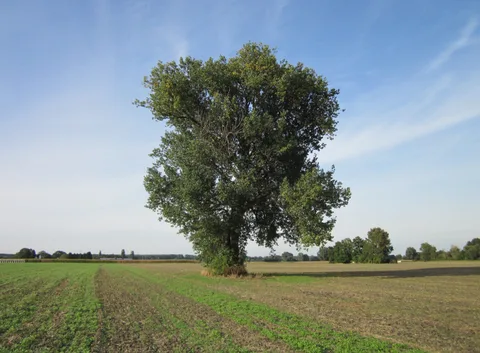
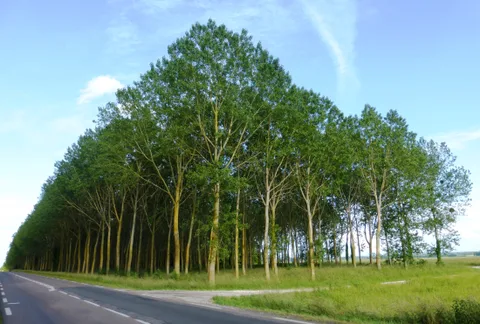
Hybrid poplars are crosses between native eastern cottonwood and European black poplar, plus newer fast-growing clones sold for windbreaks and biomass. The Database of Vascular Plants of Canada lists Populus × canadensis as introduced in Ontario, and Ontario windbreak guides have long listed 'windbreak poplar' for farm shelterbelts. Around Belleville, Quinte West, Prince Edward County and Tyendinaga they show up as rows planted for a quick screen along rural lot lines, lanes and farmyards, often 30-40 years ago and now huge, cankered and breaking. Many trees people call cottonwoods in yards are actually planted hybrids: native cottonwood grows on its own along the Bay of Quinte shoreline, river flats and wet ground, while a straight row of identical, same-aged trees on a rural lot is almost always a planted hybrid clone. The usual jobs on them are deadwood removal, storm cleanup and removal of failing rows; good replacements are longer-lived natives such as bur oak, red oak, basswood or hackberry, or white spruce and eastern white cedar for a screen.
The first hybrids between the American eastern cottonwood and the European black poplar appeared on their own in western Europe soon after cottonwood was introduced there, and were widely planted from cuttings from the late 1700s. Named clones such as 'Eugenei' (sold in the U.S. as Carolina poplar) and 'Robusta' (male) and 'Marilandica' (female, cottony) were spread around the world, and many newer clones were bred for windbreaks and fibre.
Full Tree
Identification
Leaves
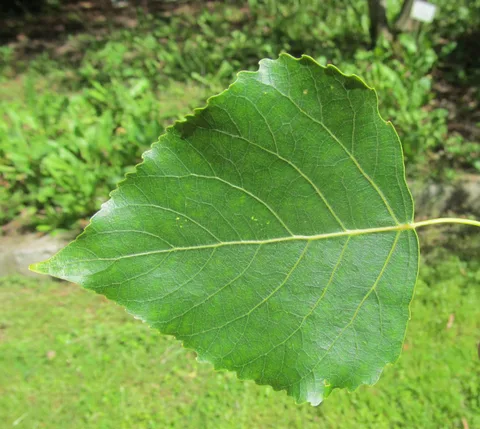
Glossy green, triangular leaves on long, flattened stalks that flutter in the wind, very much like eastern cottonwood's. The hybrid sits between its parents: eastern cottonwood leaves always have a fringe of tiny hairs along the edge and two or more small glands where the stalk meets the blade; European black poplar leaves have a smooth edge, no glands and a wedge-shaped base; hybrid poplar usually has the fringe on young leaves and glands on some leaves but not all. Because the features overlap, check several leaves from different parts of the tree, and even then a confident call is not always possible from leaves alone.
Leaves
Bark
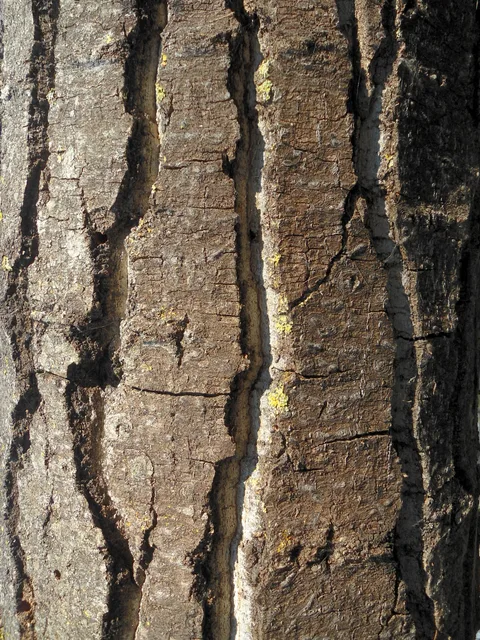
Smooth and greenish on young stems, becoming grey-brown and deeply furrowed on big trunks, similar to cottonwood. Some clones grow burls and clusters of sprouts along the trunk.
Bark
Flowers
Hanging catkins open in early spring before the leaves. Each named clone is either male (red pollen catkins, no seed) or female (greenish catkins that ripen into seed capsules), so a whole row planted from cuttings of one clone is usually all one sex.
Fruit
Female clones produce strings of small capsules that split in late spring and early summer to release seed in white cotton. The cotton drifts onto lawns, pools, screens and air-conditioner coils, and Agriculture and Agri-Food Canada notes it can be a nuisance near buildings. Male clones produce no cotton.
Growing Conditions
Climate
Grows fast on the moist clay and loam of the Bay of Quinte lowlands; dry, thin soils north of Highway 7 shorten its life sharply. Drought years set off canker, and the big, brittle crowns do poorly in ice storms and heavy wet snow.
Hardiness Zones: 4a, 4b, 5a, 5b
Light Requirements
Soil
Moisture: moist, wet
Drainage: well-drained, moderate, poor
pH Range: 5.5 - 8
Tolerance
Care & Maintenance
Pruning
Best Season: Summer, Winter
Frequency: Every 1-3 years on trees near buildings, lanes or lines once they pass about 15 m; deadwood builds up quickly
- Prioritize deadwood, hangers and long, heavy limbs over roofs, driveways and wires
- Have cankered stems and forks checked: Septoria canker makes stems break in wind
- Natural Resources Canada advises pruning out Dothichiza-cankered parts only during the main growing season
- Avoid topping; it causes dense, weakly attached sprouts
- In a declining row, removing and replanting in stages is usually better than pruning every tree
Avoid: Wet spring weather, when canker spores spread; Topping at any time of year
Watering
Establishment: Regular deep watering for the first 2 years
Mature: Uses large amounts of water; roots spread widely to find it
Seasonal Care Timeline
Spring
- Check for winter breakage and dead tops at leaf-out
- Cotton from female clones in late spring and early summer
- Canker spores spread in wet spring weather
Summer
- Drought stress that triggers canker
- Thunderstorm breakage of big, brittle limbs
- Septoria leaf spot and rust causing early leaf drop
Fall
- Look over the row after leaf drop for dead tops, cankers and hangers
- Plan removal and replanting for the dormant season
- Have slow drains near the trees checked for roots
Winter
- Ice storms and heavy wet snow break limbs and cankered stems
- Frozen ground makes removal of large trees easier on lawns and fields
- Watch for borer frass and swollen bark at the trunk base
Common Issues
Septoria Canker and Leaf Spot
HighCaused by Sphaerulina musiva (formerly Septoria musiva). It only spots the leaves of native eastern cottonwood, but black poplar and susceptible hybrid clones get stem cankers. Natural Resources Canada calls it a major threat to exotic and hybrid poplar plantings in North America, with outbreaks in mature hybrid plantations from Quebec and Ontario to the Prairies. Canker-weakened stems often break.
Symptoms: Round to angular brown leaf spots, sometimes with a pale centre, starting on lower branches, Early yellowing and leaf drop, Dark brown to black, elongated, sunken cankers on stems and young branches, Swollen, constricted stems and sprouts below damaged areas, Stems snapping at a canker in wind
Treatment: No practical cure on landscape trees; remove cankered limbs and have trees with trunk cankers near targets assessed for removal
Prevention: Plant resistant clones or, better, a different species; rake up infected leaves
Professional arborist recommended
Cytospora and Dothichiza Cankers
HighTwo canker fungi that attack stressed poplars. Cytospora is a weak pathogen that takes hold after drought, defoliation or wounding. Dothichiza (Cryptodiaporthe) canker, recorded in Eastern Canada on hybrid and Lombardy poplars, kills branches and sometimes whole trees and weakens stems so they break under snow or wind.
Symptoms: Sunken, discoloured bark with orange-brown to black, sour-smelling tissue underneath, Pimple-like fruiting bodies on dead bark; spore tendrils in wet weather, Branches dying through the canopy, with leaves yellowing and dropping early, Callus ridges around the canker edges
Treatment: Prune out infected branches back to healthy wood; remove trees with large trunk cankers
Prevention: Avoid drought stress and trunk wounds from mowers, trimmers and equipment
Professional arborist recommended
Poplar Borer
ModerateA native longhorn beetle found throughout the range of poplars in Canada. Larvae tunnel through the bark into the heartwood of trunks and roots over a 3-4 year life cycle, usually in trees on poor sites; the galleries weaken stems and let decay in.
Symptoms: Swollen bark areas on the trunk, Sap running from holes in the bark, Piles of sawdust-like frass at the base of the trunk and on roots, Branch or stem breakage at tunnelled areas
Treatment: Have heavily tunnelled trees near targets assessed; removal is often the practical answer
Prevention: Keep trees free of drought stress; avoid planting poplars on poor, dry sites
Professional arborist recommended
Weak Wood, Roots in Drains and Short Life
HighHybrid poplars grow very quickly and are short-lived. Agriculture and Agri-Food Canada gives 20-25 years under dry conditions and 50-60 years where moisture is good, and notes their shallow roots can spread 15-20 m (50-65 ft) from the tree. Big, fast trees with weak wood drop limbs in storms, and the roots go after weeping tiles, sewer laterals and septic beds.
Symptoms: Dead tops, broken limbs and hangers in an ageing row, Slow drains or roots found in a sewer or septic line, Heaving walks and driveway edges, Several trees in a row declining at the same time
Treatment: Have a professional arborist assess large trees near buildings and lines; have a plumber clear and repair affected lines; plan removal of declining rows
Prevention: Keep poplars well away from houses, drains and septic beds; replace with longer-lived trees before the row fails
Professional arborist recommended
Poplar Leaf Rust
LowMelampsora rust fungi cover the leaf undersides with orange spore pustules in late summer. Larch serves as an alternate host. Heavy rust makes leaves drop early but is rarely serious on yard trees.
Symptoms: Small orange-yellow powdery pustules on leaf undersides, Yellowing leaves and early leaf drop in late summer
Treatment: Usually cosmetic; rake and dispose of fallen leaves
Prevention: No treatment usually warranted
Sources & References
Information compiled from the following authoritative sources:
Quick Facts
When to Call an Arborist
Recommended inspection: Every 1-2 years once trees pass about 15 m near buildings, lanes or lines, and after every major wind or ice storm
- •Dark, sunken cankers on the trunk or main stems
- •Dead tops, large dead limbs or hangers
- •Swollen bark, sap runs or sawdust at the base (borers)
- •Cracks at forks or a lean toward a building, road or line
- •Mushrooms or soft wood at the base
- •Roots found in drains or septic lines
Free consultation for Belleville residents
Recommended Services
Based on Hybrid Poplar characteristics