
Weeping Willow
Salix babylonica
Overview
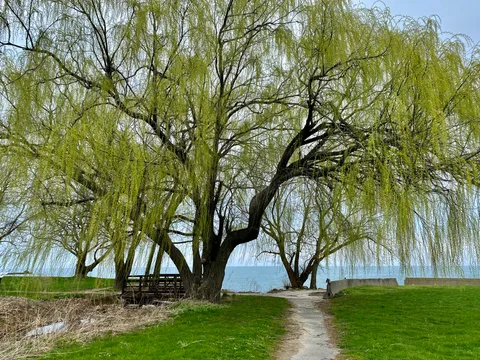
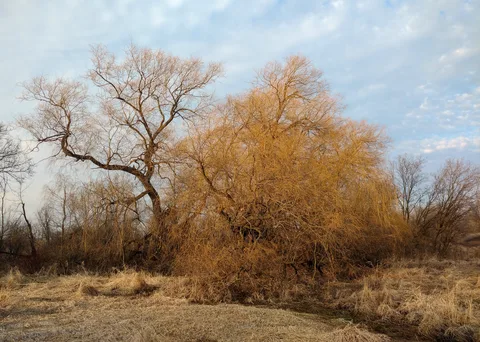
The weeping willow is the classic pond-side and backyard tree in Belleville and around the Bay of Quinte, planted for its fast growth and graceful shape beside ponds, creeks and low, wet lawns. The same traits that make it popular cause the problems: it grows huge quickly, its wood is weak, it drops a steady rain of twigs, and its roots go after drains and septic beds. Weeping willows are a frequent subject of storm-damage, pruning and removal calls in the Quinte area, often when a tree planted small beside a house or pool has outgrown the space.
Salix babylonica is native to China; Linnaeus named it after Babylon, mistakenly believing it came from there. Most weeping willows sold and planted in North America are not pure Salix babylonica but hybrids, chiefly the golden weeping willow (Salix × sepulcralis 'Chrysocoma', a cross of white willow and Babylon willow) and Salix alba 'Tristis'. Botanists still debate the naming of these trees.
Full Tree
Identification
Leaves
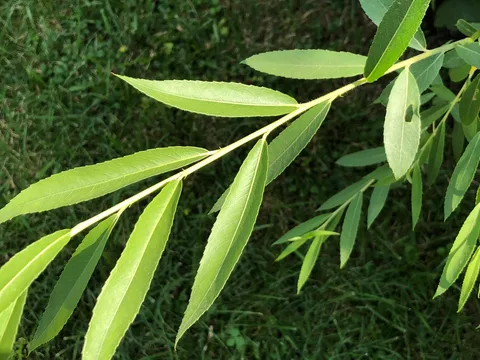
Long, slender, finely toothed leaves, light green above and greyish-green underneath, hanging from long drooping shoots. Weeping willows are among the first trees to leaf out in spring and among the last to drop their leaves in fall, when they turn greenish-yellow to gold.
Leaves
Bark
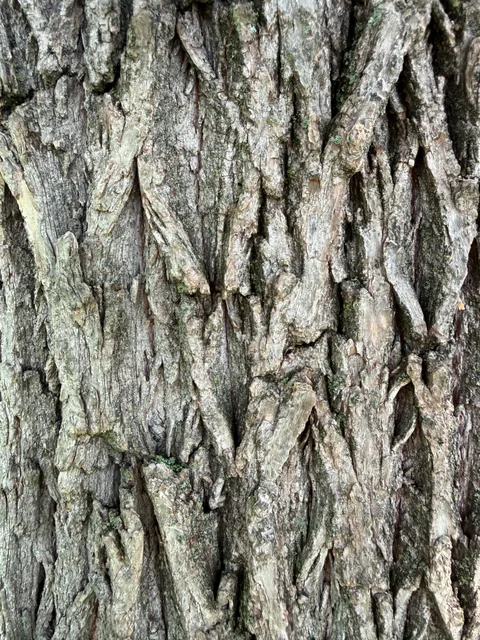
Smooth on young stems, becoming grey-brown to grey-black and irregularly furrowed on mature trunks. Golden weeping willow hybrids often show more yellow-brown, corky bark.
Bark
Flowers
Slim catkins 2.5-5 cm (1-2 inches) long appear with the new leaves in April and May. They are not showy; male catkins are the more noticeable.
Fruit
Small dry capsules ripen in late May to early June and release cottony seeds.
Growing Conditions
Climate
True Salix babylonica is rated only to USDA zone 6 and is not considered cold tolerant, so it is uncommon in northern North America. The hardier hybrids, especially golden weeping willow, are what usually survive Belleville's zone 5b winters. They grow on the Bay of Quinte lowland clays, tolerate wet sites and occasional flooding, and handle road salt and alkaline soil reasonably well, but are moderately sensitive to drought and highly susceptible to ice and windstorm damage.
Hardiness Zones: 5a, 5b
Light Requirements
Soil
Moisture: moist, wet
Drainage: well-drained, moderate, poor
pH Range: 5.5 - 8
Tolerance
Care & Maintenance
Pruning
Best Season: Fall, Winter
Frequency: Every 1-3 years while young to set structure; every 2-4 years on mature trees near houses, pools, lines or driveways, and after every major storm
- Start structural pruning young: pick one strong trunk or a few well-spaced main limbs and remove competing stems with narrow, tight forks
- Prune from late fall through winter, when the branch framework is visible; Morton Arboretum also lists summer to late fall for golden weeping willow
- Reduce the length and weight of heavy limbs that extend over roofs and driveways rather than removing whole limbs
- Remove dead, cracked and hanging branches and cut out shoots killed by willow blight
- Raise the hanging curtain only as much as needed for clearance; cut back to a side branch, not mid-twig
- Never top a weeping willow: the dense sprouts that regrow are weakly attached and break easily
- Large limbs and removals near buildings should be handled by a professional arborist with rigging
Avoid: Wet spring weather, when willow scab and canker fungi spread most readily; Spring leaf-out, when bark tears easily
Watering
Establishment: Keep the soil consistently moist for the first two growing seasons
Mature: Trees beside ponds, ditches and shorelines rarely need watering; trees in ordinary yard soil benefit from water in dry spells
Seasonal Care Timeline
Spring
- Clear and assess limbs broken by winter ice and wet snow
- Wet springs bring willow scab: watch for new shoots suddenly turning brown
- Early leaf-out makes trees vulnerable to late wet snowfalls
Summer
- Thunderstorm downbursts break heavy limbs and split trunks
- Aphid honeydew and sooty mould on cars, decks and patios
- Leaf beetles and drought stress on trees away from water
Fall
- Late leaf drop and twig litter clog eavestroughs, pool filters and drains
- Good time to book structural pruning and risk inspection once leaves drop
- Rake up fallen leaves and twigs to reduce willow blight carry-over
Winter
- Freezing rain and wet snow can split forks and snap large limbs
- Dormant season is the best time for pruning and removal
- Look for hanging broken limbs after every storm
Common Issues
Storm Breakage and Limb Failure
HighWeeping willows grow very fast and have weak wood and weak branch structure. They are highly susceptible to ice and windstorm damage, and the long hanging branches catch wet snow. Large limbs and split trunks over houses, pools and driveways are a common result.
Symptoms: Constant litter of twigs and small branches, Cracks or seams where large limbs or trunks meet, Broken or hanging limbs in the crown, Decay or cavities at old pruning cuts and storm wounds, Trunk or whole tree leaning further after a storm
Treatment: Risk assessment by a professional arborist, followed by deadwood removal, weight reduction of long limbs, cabling where suitable, or removal where the risk cannot be managed
Prevention: Structural pruning while young, regular inspection, and planting well away from buildings, pools and power lines
Professional arborist recommended
Roots in Drains, Sewers and Septic Systems
ModerateWeeping willow's shallow, aggressive roots seek water and are known for invading drain tiles, sewer pipes and septic beds, and for lifting nearby paving.
Symptoms: Slow drains or recurring sewer backups, Roots found during a drain camera inspection, Septic bed not draining, or soggy patches over the bed, Heaving walkways, patios or pool decks near the tree
Treatment: Have a plumber or septic contractor clear and repair the line or bed; a professional arborist can assess whether root pruning is safe or whether removal is the better option
Prevention: Plant weeping willows well away from sewer laterals, septic beds, wells, pools and foundations
Professional arborist recommended
Willow Blight (Willow Scab and Black Canker)
ModerateTwo fungi that often attack willows together and overwinter on dead twigs. Willow scab kills new leaves and shoots in wet spring weather; black canker forms cankers on older stems later in the season. Repeated severe years cause defoliation, branch dieback and sometimes death.
Symptoms: New leaves and shoots suddenly browning and wilting in a wet spring, Olive-brown velvety spore masses on dead leaves and leaf stalks, Dark brown to black cankers at the base of leaf stalks and on twigs, Pinkish spore masses on stem cankers in wet weather, Thinning crown with dead shoot tips
Treatment: Prune out and destroy diseased branches during the dormant season. Agriculture and Agri-Food Canada notes that no products are registered in Canada for either disease; Penn State Extension suggests protective fungicide sprays only for high-value trees
Prevention: Good air circulation, removing dead twigs, and reducing drought stress
Crown Gall
ModerateA bacterial disease (Agrobacterium tumefaciens) that causes woody galls on the trunk at the soil line and on roots. A gall that encircles a stem or root kills the tissue beyond it.
Symptoms: Rough, irregular, woody swellings at the base of the trunk or on roots, Galls on lower stems, Decline and dieback beyond large galls
Treatment: No cure; remove severely affected trees and do not replant susceptible trees or shrubs in the same spot
Prevention: Avoid wounding the trunk base and roots with mowers and trimmers; buy nursery stock free of galls
Borers (Poplar-and-Willow Borer)
ModerateWeeping willows are attacked by wood borers, including the poplar-and-willow borer, whose larvae tunnel through stems and branches. Tunnelling severely weakens limbs and trunks so they break in high winds or ice storms.
Symptoms: Small holes with boring dust on stems and branches, Dead bark patches that crack and ooze sap, Fading foliage and dying branches, Limbs breaking at tunnelled sections
Treatment: No pesticides are registered for the poplar-and-willow borer in Canada. Remove and destroy infested branches before May or June; have an arborist assess whether large tunnelled limbs are safe
Prevention: Keep trees vigorous and avoid wounding the trunk
Professional arborist recommended
Aphids, Scale and Willow Leaf Beetle
LowAphids (including the giant willow aphid) and scale insects suck sap and drip sticky honeydew onto cars, decks and patios below, where it grows black sooty mould. The imported willow leaf beetle skeletonizes leaves.
Symptoms: Sticky honeydew on surfaces under the tree, Black sooty mould on leaves and hard surfaces, Wasps and ants visiting the branches, Skeletonized or chewed leaves, Crusty bumps (scale) on twigs
Treatment: Usually cosmetic on established trees; hosing off small trees helps. Heavy, repeated infestations on young trees can be assessed by an arborist
Prevention: Avoid excess nitrogen fertilizer, which favours aphids; encourage natural predators by avoiding broad-spectrum sprays
Sources & References
Information compiled from the following authoritative sources:
Quick Facts
When to Call an Arborist
Recommended inspection: Every 1-2 years for trees near houses, pools, driveways or lines, and after every major wind or ice storm
- •Cracks or seams where large limbs or trunks meet
- •Broken or hanging limbs in the crown
- •Large dead sections of the crown
- •Cavities, decay or mushrooms on the trunk or root flare
- •Galls at the trunk base
- •Boring dust or oozing holes on stems
- •Trunk leaning further after a storm
- •Roots in drains, sewer lines or septic beds
Free consultation for Belleville residents
Recommended Services
Based on Weeping Willow characteristics