
Littleleaf Linden
Tilia cordata
Overview
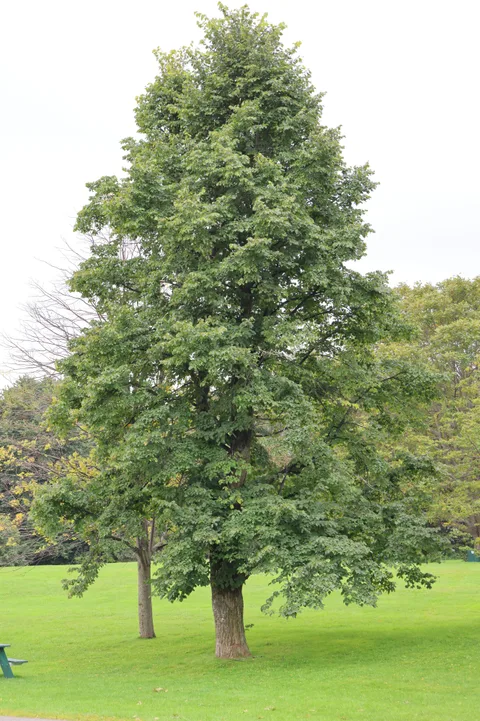
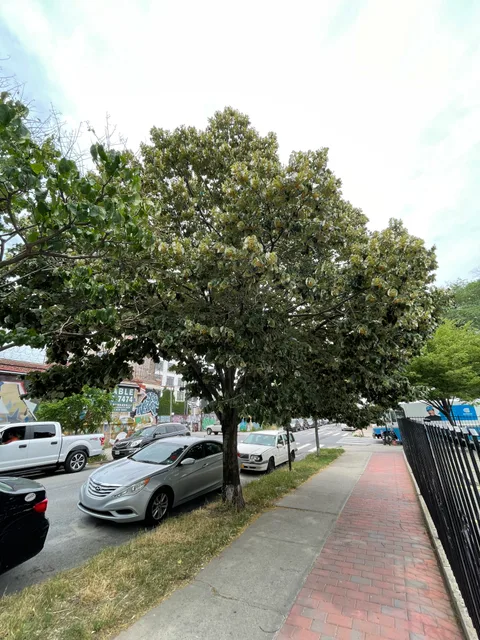
A European species, Littleleaf Linden has been one of the standard formal street and parking-lot trees in Ontario for decades, valued for its dense symmetrical shape and tolerance of city conditions. In Belleville and across the Quinte area it is a familiar boulevard, plaza and commercial-lot tree, usually as the 'Greenspire' selection, and is often mistaken for our native Basswood, which has much larger leaves.
Littleleaf Linden is native to Europe, where old trees are often protected landmarks. It is planted in North America as a shade and street tree, and 'Greenspire', selected for its straight trunk and neat pyramidal habit, became one of the most widely planted cultivars.
Full Tree
Identification
Leaves
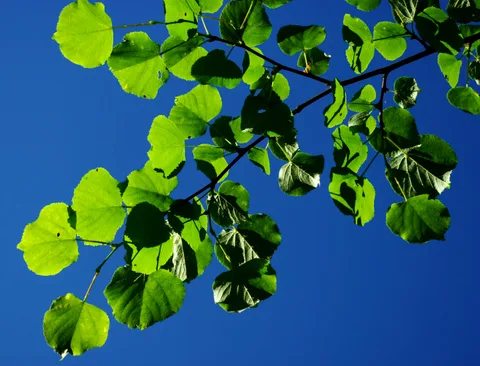
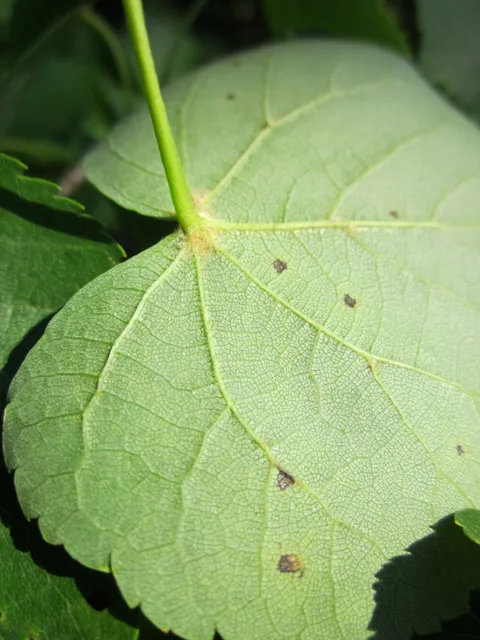
Small heart-shaped leaves, dark green and shiny above and paler beneath. Turn one over: small rusty-brown tufts of hair sit in the angles where the veins meet the midrib. Native Basswood has much larger leaves without the rusty tufts. Fall colour is a modest yellow.
Leaves
Bark
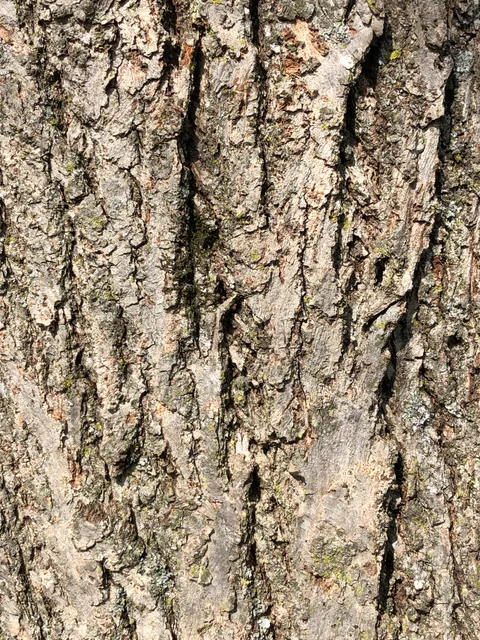
Smooth grey-brown bark on young trees, developing ridges and furrows and eventually flaky plates. Young trunks are thin-barked and prone to winter sunscald on the south and southwest side.
Bark
Flowers
Small, very fragrant, creamy yellow flowers hang in loose clusters of about 4-10, each cluster attached to a strap-like pale green bract. Bloom is late June to early July in Ontario and draws large numbers of bees. Dead and dying bumble bees are sometimes found under flowering lindens. A 2019 Oregon State University study under Littleleaf Lindens found no mannose in the nectar (the older 'toxic linden' explanation) and proposed that cool mornings, low nectar and bees' fidelity to the trees leave them too low on energy to fly; the cause is still being studied. Never spray insecticide on a linden in bloom: a 2013 die-off of more than 50,000 bumble bees under linden trees was caused by a pesticide treatment.
Fruit
Small round, fuzzy nutlets 5-8 mm across hang in clusters from the same strap-like bract, which acts as a wing when the cluster falls in late summer and fall.
Growing Conditions
Climate
Fully hardy in Belleville's zone 5b and rated to zone 3. It tolerates clay, compaction and a wide pH range, so it handles the heavy soils of the Bay of Quinte lowlands, but it does best in deep, moist, well-drained soil. It is sensitive to road salt and to drought in small tree pits. Ice storms can break limbs where branches are tightly packed in the dense crown.
Hardiness Zones: 3, 4a, 4b, 5a, 5b
Light Requirements
Soil
Moisture: moist
Drainage: well-drained, moderate
pH Range: 5 - 8
Tolerance
Care & Maintenance
Pruning
Best Season: Winter
Frequency: Structural pruning every 2-3 years while young; every 5 years or as needed once mature
- Prune in the dormant season, late fall to late winter, when the branch structure is easy to see
- Keep a single central leader on 'Greenspire' and other street selections and remove competing leaders early
- Raise the lower crown gradually over sidewalks, driveways and parking spaces rather than all at once
- Cut off shoots from the trunk base and root flare (common on grafted trees) as they appear
- Lindens tolerate shearing and can be kept as a large formal hedge if started young
Avoid: Spring leaf-out, when the bark tears easily; Bloom (late June-early July), when bees are working the flowers
Watering
Establishment: Water deeply once a week for the first 2-3 summers, more often on sandy soil
Mature: Tolerates average conditions but prefers evenly moist, deep soil
Seasonal Care Timeline
Spring
- Check boulevard trees for salt damage: late leaf-out, scorched edges, dieback on the road side
- Flush salted root zones with deep watering after snow melt
- Remove trunk wraps and cut off basal sprouts
Summer
- Aphid honeydew and sooty mould dripping on cars and patios
- Japanese beetle skeletonizing from late June to September
- No insecticide sprays during bloom (late June-early July) while bees are on the flowers; dead bumble bees under flowering lindens are a known, still-studied phenomenon
- Water during dry spells, especially street trees
Fall
- Flower bracts and nutlets drop on walks and cars
- Wrap young trunks before winter
- Schedule dormant pruning and clearance work
Winter
- Sunscald on young thin-barked trunks
- Salt spray and salty snowbanks on the root zone
- Ice loading on the dense crown
Common Issues
Aphids and Sooty Mould
LowLinden aphids feed on the undersides of leaves and drip sticky honeydew. Black sooty mould fungi then grow on the honeydew. It is more of a nuisance than a threat to the tree.
Symptoms: Sticky, shiny coating on cars, patio furniture and pavement under the tree, Black, soot-like film on leaves and twigs, Clusters of small soft-bodied insects on leaf undersides, Increased bee and wasp traffic on the honeydew
Treatment: Usually none needed on a healthy tree; a strong water spray reduces numbers on small trees. Avoid broad-spectrum insecticides, which kill the ladybirds and hoverflies that control aphids and harm bees on the flowers.
Prevention: Do not over-fertilize with nitrogen. Avoid planting lindens directly over parking spaces and patios where the drip will be a problem.
Japanese Beetle
ModerateAdult Japanese beetles skeletonize linden leaves, eating the tissue between the veins. Littleleaf Linden, and 'Greenspire' in particular, is highly susceptible.
Symptoms: Lace-like leaves with only the veins left, Metallic green beetles with bronze wing covers feeding in groups, Browning crown starting at the sunny top of the tree, Damage from late June through September
Treatment: Hand-pick or shake beetles into soapy water on small trees early in the morning. Heavy, repeated defoliation on a valued tree warrants a professional assessment. Do not spray while the tree is in bloom.
Prevention: Keep the tree well watered so it can replace lost leaves.
Linden Borer
HighNative longhorned beetle (Saperda vestita) whose larvae tunnel into the lower trunk, lower branches and surface roots. Littleleaf Lindens are preferred hosts, and heavy infestations can kill the tree.
Symptoms: Round exit holes about 6 mm (1/4 in) wide in the lower trunk, Thinning canopy and dying limbs, Black longhorned beetles covered in dense olive-yellow hairs, up to about 2 cm (7/8 in) long
Treatment: Have an arborist confirm the cause of dieback. Heavily infested trees are usually removed, and the wood chipped, which destroys the larvae.
Prevention: Keep trees vigorous with watering and mulch, avoid trunk wounds from mowers and trimmers, and inspect stressed street trees each year.
Professional arborist recommended
Road Salt Injury
ModerateLittleleaf Linden is sensitive to de-icing salt. Salty runoff kills roots and causes branch dieback, and salt spray burns buds on the road side.
Symptoms: Scorched brown leaf edges, Late leaf-out in spring compared with other trees, Dieback concentrated on the side facing the road, Thin, small-leaved crown on boulevard trees
Treatment: Flush the root zone with deep watering in spring after the snow melts, and have declining trees assessed.
Prevention: Do not pile salted snow on the root zone, use sand or calcium magnesium acetate near the tree, and plant salt-tolerant species along heavily salted roads.
Winter Sunscald
ModerateThin-barked young lindens can split or die back on the south and southwest side of the trunk when winter sun warms the bark and it then freezes again.
Symptoms: Sunken, cracked or peeling bark on the south or southwest side, Long vertical cracks on young trunks, Dead bark patches found in spring
Treatment: Leave damaged bark alone and keep the tree watered; have large wounds assessed.
Prevention: Wrap young trunks in a light-coloured tree wrap from the ground to the first branches in late fall and remove it in March; keep low branches on young trees for shade.
Sources & References
Information compiled from the following authoritative sources:
Quick Facts
When to Call an Arborist
Recommended inspection: Every 2-3 years, and yearly for boulevard trees exposed to salt
- •Round holes in the lower trunk or dying limbs (possible linden borer)
- •Mushrooms or shelf fungi at the trunk base
- •Branch dieback on the road side after winter
- •Repeated heavy defoliation by Japanese beetles
- •Cracks or sunken bark on young trunks
- •Branches over cars, sidewalks or wires that need clearance pruning
Free consultation for Belleville residents
Recommended Services
Based on Littleleaf Linden characteristics