
Siberian Elm
Ulmus pumila
Overview
Siberian elm is not native to Ontario, but it now grows here outside of cultivation. Around Belleville and the Quinte area it shows up as an older yard or windbreak tree that was planted for quick shade, and as self-sown trees in fencerows, along roadsides and in neglected lots. Several neighbouring U.S. jurisdictions treat it as an invasive plant, and it is no longer recommended for planting because of its invasiveness and its brittle branches. Wilsaw usually recommends removing it and replanting with a native tree.
Native to eastern Asia, Siberian elm was brought to North America in the 1860s for its hardiness, fast growth and tolerance of dry and wet sites, and was widely sold as a windbreak and shelterbelt tree. It is also resistant to Dutch elm disease, the disease that killed most of the native American elms in Ontario's towns.
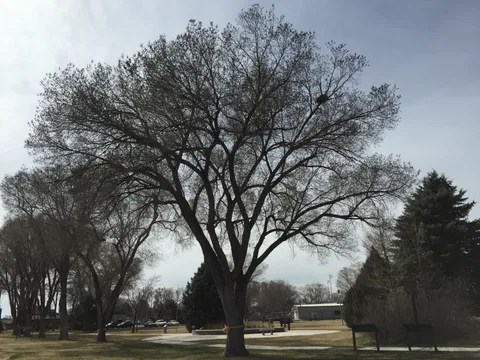
Full Tree
Identification
Leaves
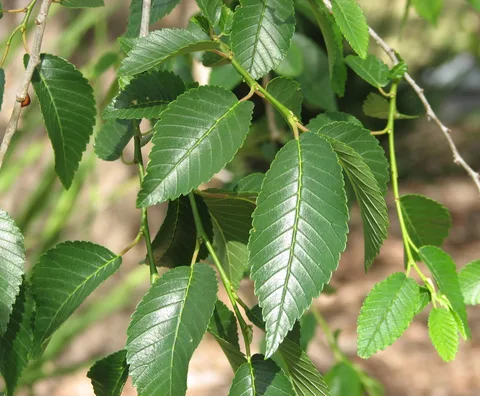
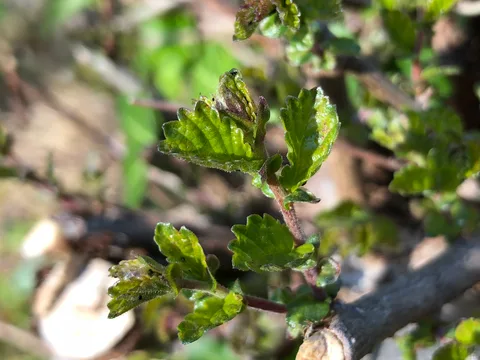
Small, smooth, dark green leaves, usually under 5 cm (2 in) long, with single teeth and a base that is nearly even. American and slippery elm leaves are more than twice that size (over 7 cm, 2.8 in), double-toothed and clearly lopsided at the base. Siberian elm is often sold or called "Chinese elm", but the true Chinese (lacebark) elm flowers in late summer or fall and has blunter leaf teeth; Siberian elm flowers in early spring before its leaves open.
Leaves
Bark
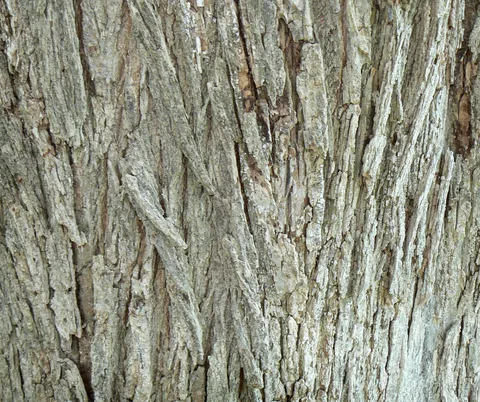
Grey to grey-brown bark that becomes ridged and furrowed with age. Dark, wet streaks running down from wounds or forks are a common sign of wetwood (slime flux).
Bark
Flowers
Tiny greenish to reddish flowers without petals hang in small clusters of two to five along the twigs between March and May, before the leaves unfold.
Fruit
Flat, round, papery samaras about 1.2 cm (1/2 in) across, with the single seed in the centre and a small notch at the tip. They ripen within weeks of flowering, fall in masses in late spring, blow into gutters, beds and cracks, and germinate quickly.
Growing Conditions
Climate
Extremely cold and drought hardy, and it tolerates the heavy clay of the Bay of Quinte lowlands, the thin soils north of Highway 7, compacted yards and road edges. Its weakness in Eastern Ontario is not the climate but its wood: ice storms and heavy wet snow load its brittle limbs until they snap.
Hardiness Zones: 4a, 4b, 5a, 5b
Light Requirements
Soil
Moisture: dry, moist
Drainage: well-drained, moderate, poor
pH Range: 5.5 - 8
Tolerance
Care & Maintenance
Pruning
Best Season: Winter
Frequency: Every 1-3 years on yard trees near houses, driveways or lines: deadwood and broken limbs build up quickly
- On an established tree, the priority is deadwood and reducing long, heavy limbs over roofs, driveways, fences and wires before they break
- Avoid topping or heavy heading cuts: Siberian elm answers wounds with dense sprouts that are weakly attached and break again
- Do the work in the dormant season, late fall to late winter, when the branch structure is easy to see
- If you are deciding between repeated pruning and removal, removal and replanting with a better tree is usually the long-term answer
- A cut tree resprouts from the stump and roots, so plan stump grinding or follow-up control of sprouts
Avoid: Heavy pruning during leaf-out and early summer, when the tree is in active growth; Topping at any time of year
Watering
Establishment: Not recommended for planting; do not water or nurse volunteer seedlings
Mature: Very drought tolerant; needs no watering
Seasonal Care Timeline
Spring
- Flowers open in March-April and seed falls by late spring, filling gutters, beds and eavestroughs
- Seedlings appear within weeks; pull them while they are small
- Check for limbs damaged by late-winter ice and snow
Summer
- Thunderstorm breakage of brittle limbs
- Elm leaf beetle skeletonizing the leaves
- Wetwood seepage staining trunks and decks
Fall
- Walk the tree after leaf drop to spot deadwood and stubs
- Plan removal and replanting for the dormant season
- Choose a native replacement: hackberry, basswood or red oak
Winter
- Ice storms and heavy wet snow snap limbs and split forks
- Dormant season is the best time for pruning or removal
- Mark volunteer elms along fences and foundations for removal
Common Issues
Brittle wood and storm breakage
HighSiberian elm's branches are brittle and break easily, which is one of the main reasons it is no longer recommended for planting. Wet snow, ice and summer thunderstorms bring down limbs and leave stubs that sprout and break again.
Symptoms: Broken or hanging limbs after storms, Deadwood throughout the crown, Splits at narrow, tight branch forks, Clusters of thin sprouts around old breaks
Treatment: Remove broken and hanging limbs promptly; reduce over-extended limbs over targets; have a large or split tree assessed for removal
Prevention: Regular deadwood removal on trees near houses and driveways; do not plant new Siberian elms
Professional arborist recommended
Aggressive seeding and invasive spread
HighProlific, wind-spread seed that germinates quickly lets Siberian elm form dense thickets on open, disturbed ground such as roadsides, fencerows and old fields, displacing native plants. Cut trees resprout from the stump and roots.
Symptoms: Masses of papery seeds in late spring, Seedlings in gardens, gutters, fencerows and pavement cracks, Thickets of young elms along fences and lot edges, Sprouts from stumps and roots after cutting
Treatment: Pull seedlings by hand while small; cut larger stems and grind the stump or treat sprouts as they appear. Girdling in late spring kills a tree slowly over one to two years without stimulating sprouts. Herbicide stump treatments are used where Ontario's pesticide rules allow, by a licensed applicator.
Prevention: Do not plant Siberian elm; remove seed trees near gardens and natural areas and replant with a native species
Elm Leaf Beetle
ModerateAn introduced leaf beetle recorded in Ontario. Larvae and adults skeletonize elm leaves, eating the leaf surface between the veins.
Symptoms: Leaves with lace-like, skeletonized patches, Browning foliage by midsummer, Larvae and egg clusters on the undersides of leaves
Treatment: Usually cosmetic on Siberian elm; heavy defoliation of a tree you are keeping can be treated by an arborist
Prevention: Keep the tree free of deadwood and drought stress; consider removal rather than repeated treatment
Wetwood (Slime Flux)
LowA bacterial infection of the inner wood common in Siberian elm. Fermented sap seeps out of wounds and branch forks and stains the bark.
Symptoms: Dark, wet streaks running down the trunk, Sour-smelling ooze from wounds or forks, Dead bark or grass where the seepage collects
Treatment: No cure; the seepage itself is mostly cosmetic. Have an arborist check large seeping wounds for decay behind them
Prevention: Avoid large pruning wounds and trunk injuries
Sources & References
Information compiled from the following authoritative sources:
Quick Facts
When to Call an Arborist
Recommended inspection: Every 1-2 years for trees near houses, driveways, play areas or wires, and after every major ice or wind storm
- •Large dead or broken limbs, or hangers caught in the crown
- •Cracks or splits at tight branch forks
- •Cavities, fungal growth or soft wood at old wounds
- •Wetwood seepage from large wounds on the main trunk
- •A tree leaning toward a house, road or line, or heaving roots
- •Volunteer elms growing against foundations, fences or under wires
Free consultation for Belleville residents
Recommended Services
Based on Siberian Elm characteristics